
Decoding the Spec Sheet: Key Parameters for Single Cylinder Diesel Engine Selection
A single cylinder diesel engine is selected by numbers, and every number on a specification sheet carries a decision with it. Displacement sets the torque ceiling. Bore and stroke determine where that torque sits on the speed band. Compression ratio governs how reliably the engine starts and how completely it burns fuel. Cooling method decides how long the engine can hold load. The starting system decides who can operate it and where it can be deployed.
This technical guide decodes those parameters line by line: what each one measures, what it controls in real operation, and which trade-off it carries. It then converts them into a reading sequence that can be applied to any single cylinder diesel engine specification sheet, from any supplier.
The same decision also has a supply side — minimum order quantity, lead time, customization capability, acceptance criteria, and certification scope. For buyers moving from evaluation into execution, those parameters determine whether a technically correct engine actually arrives on site.
Willson is a single cylinder diesel engine brand manufactured by CHANGZHOU VISION INTERNATIONAL TRADING CO., LTD., a company based in Changzhou, Jiangsu, China. Its range covers 3–45 HP single-cylinder air-cooled and water-cooled diesel engines used to power small tractors, agricultural machinery, generator sets, water pumps, small construction machinery, air compressors, inland waterway vessels, and agricultural and sideline product processing equipment. Two configurations from that range — the ZS1115 and the ZS1135 — are used below as worked examples of how spec-sheet lines convert into operating decisions.
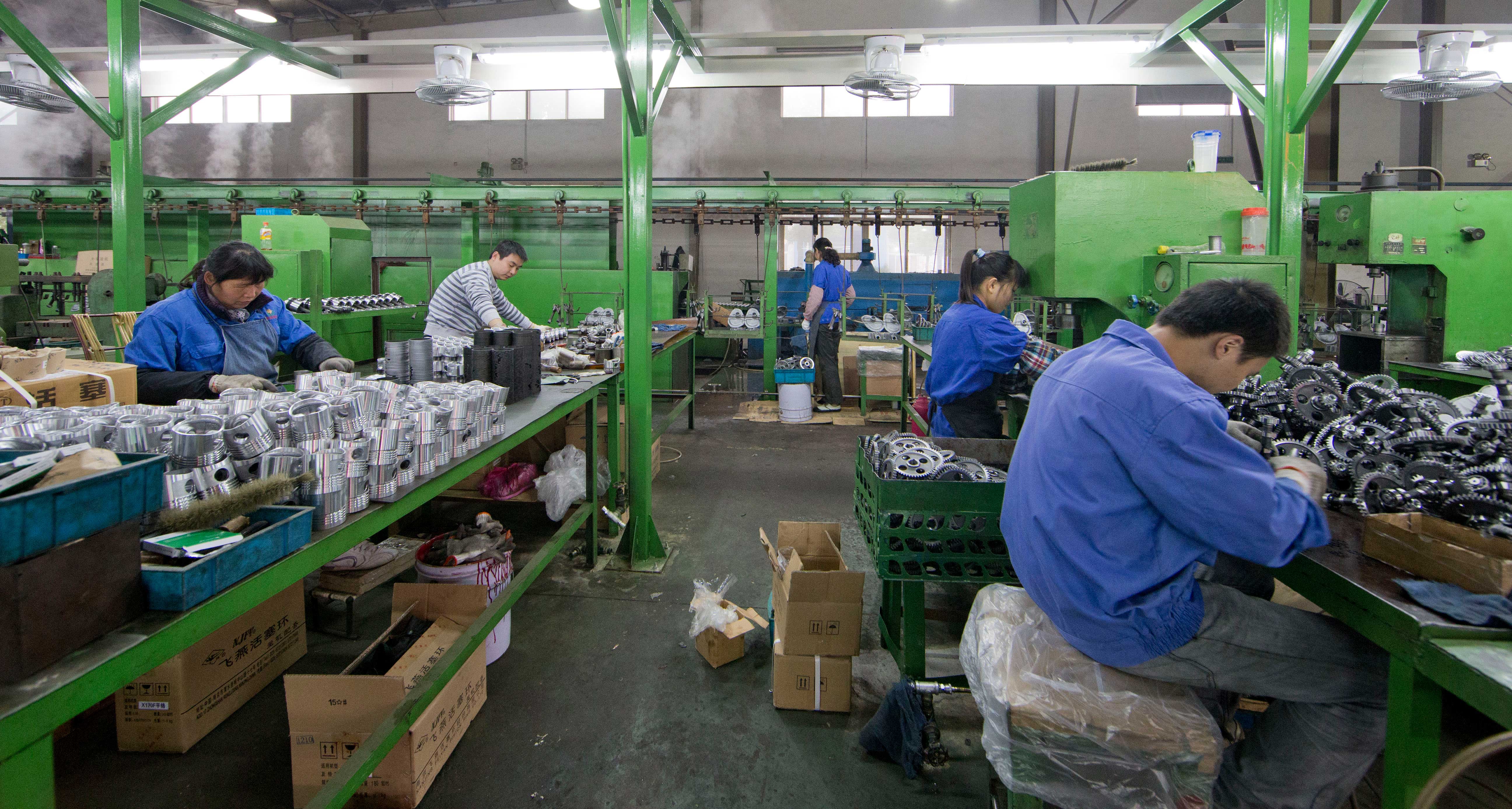
Component assembly: the stage where documented specification values are converted into a finished single cylinder diesel engine.
Problem Definition: Why a Spec Sheet Alone Does Not Select an Engine
A specification sheet describes an engine at one defined operating point. A machine demands performance across a range of conditions, and the gap between the two is where sourcing decisions fail.
Four failure patterns account for most mismatches:
- Buying on horsepower alone. Rated power is quoted at rated speed. Both the ZS1115 (20 HP) and the ZS1135 (35 HP) are rated at 2200 rpm, which means the quoted figure applies only at that speed. The real question is whether the engine delivers the required torque at the speed the driven machine actually runs.
- Treating cooling as a detail. An air cooled diesel engine rejects heat through airflow over its fins; a water cooled diesel engine rejects heat through a coolant circuit. One tolerates intermittent duty in dusty conditions with minimal maintenance, the other holds a stable jacket temperature through long continuous runs. Choosing the wrong one pushes the engine to its thermal limit or adds maintenance the application never needed.
- Ignoring the operating-cost parameters. Specific fuel consumption and oil consumption, both expressed in g/kW·h, are normalised against output, which makes them directly comparable between engines of different sizes. In continuous duty, such as irrigation pumping or rice milling, these are the numbers that compound over a season.
- Ignoring the supply-side parameters. The Willson supply model specifies a minimum order quantity of one 20 ft container, a lead time of 25–45 days, and FOB or EXW delivery terms. A technically correct engine that cannot be delivered inside the project window stops the project just as effectively as the wrong engine.
Industry Background: Where These Parameters Get Tested
The parameters above matter because of where these engines are actually used. Agriculture accounted for approximately 42.3% of single cylinder diesel engine market share in 2025, making it the dominant application category (Dataintelo). That concentration explains why irrigation and tillage duty cycles shape how engines in this class are specified: long hours, variable load, and limited access to sophisticated maintenance.
The market itself is large and growing slowly rather than transforming. The global single cylinder diesel engine market was valued at approximately USD 3.34 billion in 2025 and is projected to reach USD 3.74 billion by 2035 (Global Growth Insights). Asia Pacific held a 58.2% revenue share in 2025 (Dataintelo), reflecting both the manufacturing base and the agricultural demand concentrated in the region. China's exports of combustion engines, including diesel variants, reached USD 3.29 billion in 2025, with Russia, Vietnam, and India among the major destinations (Observatory of Economic Complexity).
Regulation adds a second layer. U.S. EPA Tier 4 emission standards regulate particulate matter (PM) and nitrogen oxides (NOx) for off-highway diesel engines, with exemptions for engines under 24 horsepower (U.S. Environmental Protection Agency). That creates a practical split inside the single cylinder range: smaller engines used in agriculture and light industrial duty sit in a different compliance category from larger units, which is one reason the small diesel engine segment continues to be specified on mechanical parameters rather than on emissions hardware.
On the supply side, the competitive field is well documented. Leading global manufacturers in the small diesel engine sector include Yanmar, Kubota, Kohler, and Hatz, while prominent Chinese manufacturers include Changchai and Shifeng Group (Intel Market Research). The practical implication for buyers is that the parameter set is broadly comparable across suppliers — the differences show up in how consistently each supplier documents, tests, and certifies what it sells.
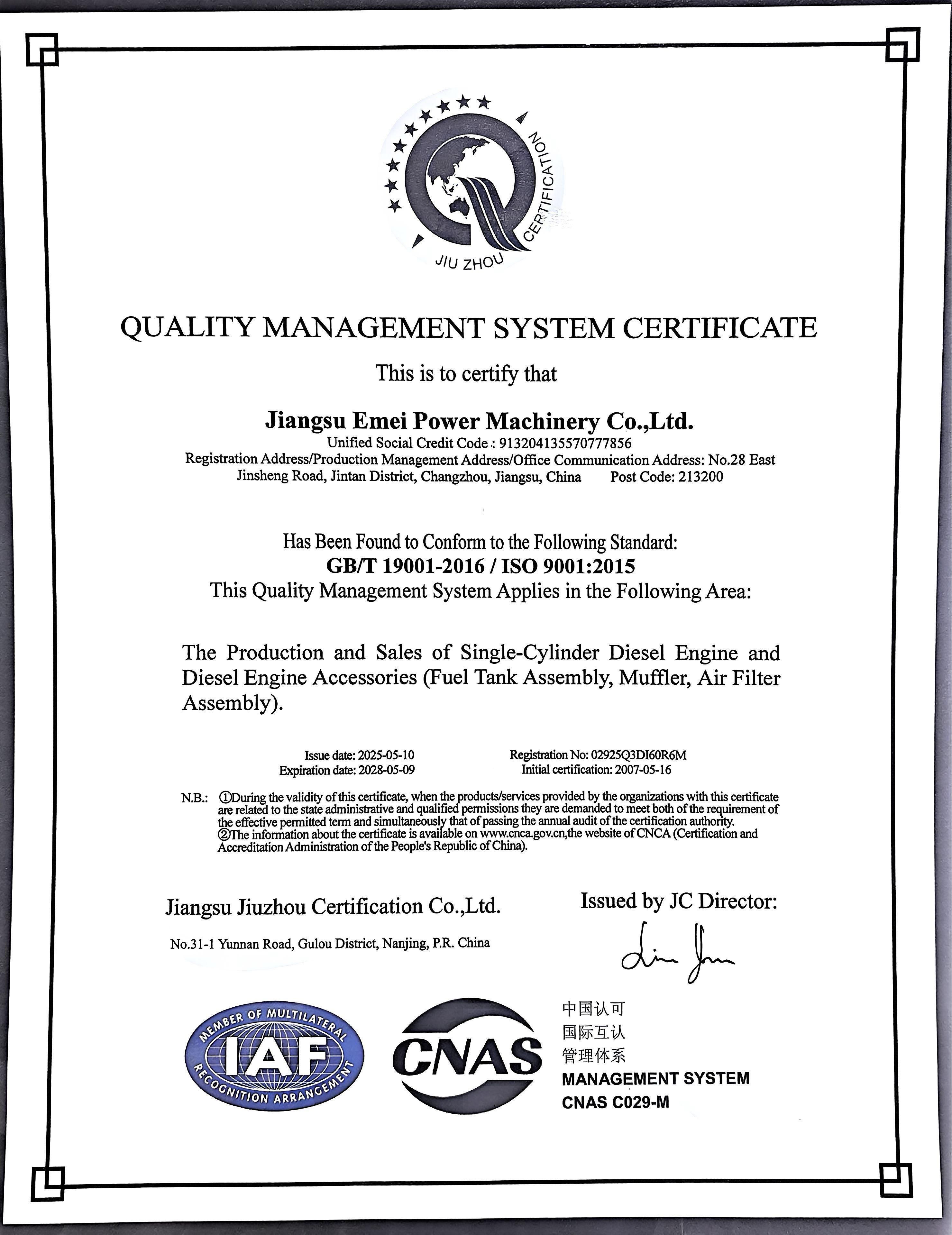
Quality management certification with a defined product scope: GB/T 19001-2016 / ISO 9001:2015 certificate number 02925Q3D160R6M, covering the production and sales of single-cylinder diesel engines and diesel engine accessories.
The Core Parameters, Decoded One by One
Displacement and Bore × Stroke
Displacement is the swept volume of the cylinder — the volume the piston displaces between top and bottom dead centre. Bore × stroke describes the shape of that volume. Together they set the torque ceiling of the engine and determine whether it is biased toward high torque at lower speed or toward power at higher speed.
In the Willson range, the ZS1115 has a bore × stroke of 115 × 115 mm and a displacement of 1.195 L, while the ZS1135 has a bore × stroke of 132.5 × 125 mm and a displacement of 1.73 L. Both are long-stroke or square configurations, a geometry that favours torque delivery over engine speed — which is what a water pump, thresher, or tiller actually needs.
What it controls: the maximum torque available, and therefore the heaviest load the engine can start and carry. Trade-off: larger displacement means more weight, more fuel per hour at the same load, and a larger physical envelope. Displacement cannot be compensated for by raising speed; an engine that is too small for the load will run at its limit and wear faster.
Compression Ratio
A diesel engine has no spark plug. Fuel ignites from the heat generated when intake air is compressed, so compression ratio governs ignition reliability, combustion completeness, and cold-start behaviour. A higher ratio improves ignition quality and thermal efficiency, but it also raises peak cylinder pressure and increases the mechanical load carried by the piston, rings, bearings, and head sealing surfaces.
What it tells a buyer: whether the engine will start readily in cold ambient conditions, and how much structural margin the design carries. Because compression ratio is frequently omitted from simplified spec sheets, it should be requested explicitly, together with the operating point at which it is quoted.
Limit to note: compression ratio is a design value, not a field adjustment. Raising it after manufacture changes the load assumptions the engine was built around, and it is not a legitimate way to increase power.
What matters just as much is whether the assembled engine actually delivers the designed compression. Cylinder head sealing, valve seat condition, and controlled head-bolt torque determine whether the number on the sheet survives contact with service.
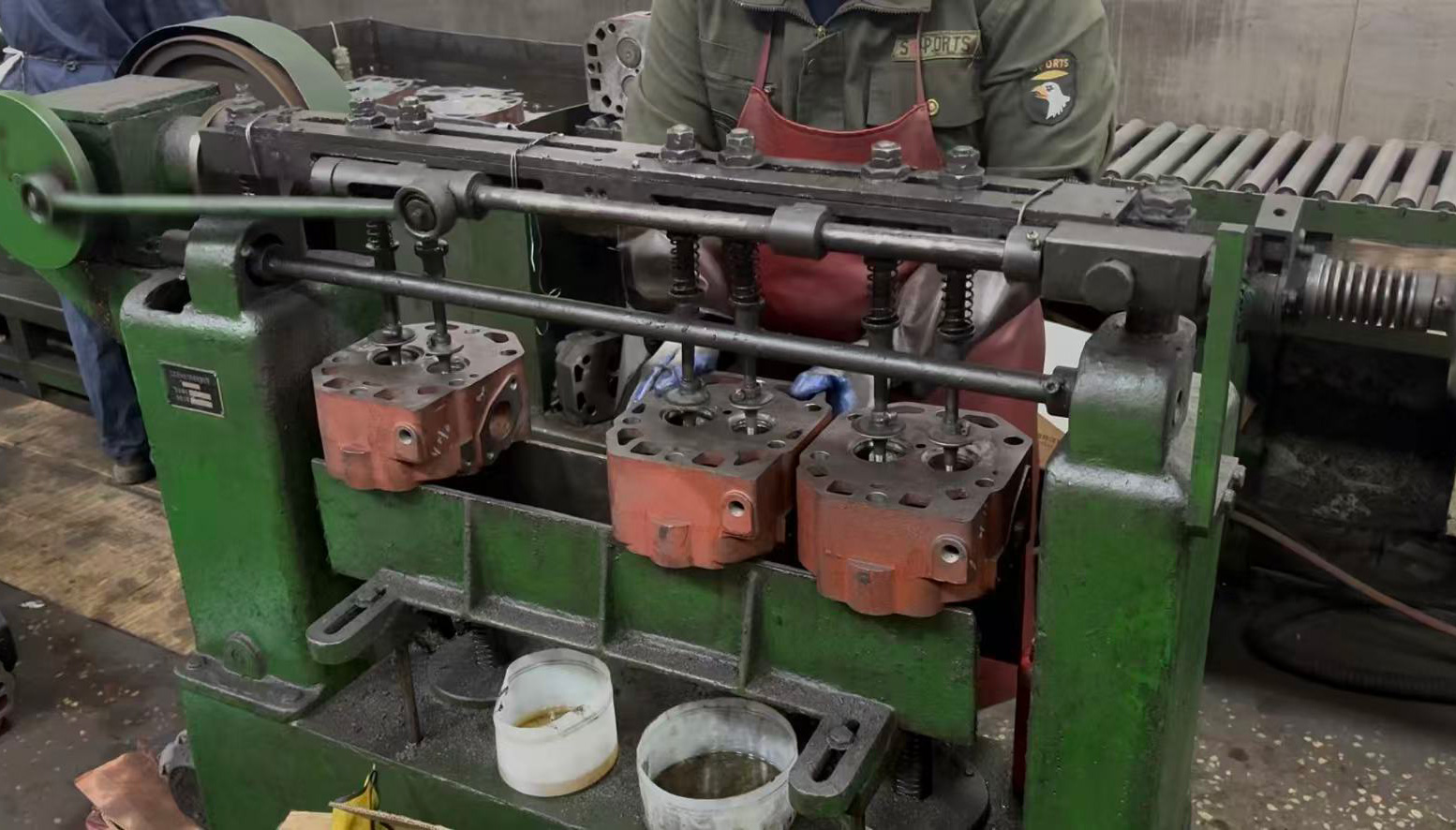
Cylinder head and valves: sealing quality and valve condition determine whether the designed compression ratio is delivered in service, not just on paper.
Rated Power and Rated Speed
Rated power is always quoted at a rated speed, and the two must be read together. The ZS1115 is rated at 20 HP at 2200 rpm; the ZS1135 is rated at 35 HP at 2200 rpm. Neither figure is available across the whole speed range.
What it controls: whether the machine can be matched to the engine's rated point. In a generator set, engine speed is held by the governor and the drive ratio, so the selection question is whether the engine can hold rated speed under applied electrical load. In a water pump, impeller size and speed determine the duty point, so the engine must be matched to the pump curve rather than to a peak power figure.
Derating consideration: published ratings assume a reference ambient temperature and altitude. In high ambient temperatures or at altitude, available power falls, so the engine should be selected with margin rather than at the nameplate limit. Continuous operation at maximum rated power also shortens service life compared with operation at a partial load point.
Cooling Method
Cooling is the parameter that decides whether an engine can serve a duty cycle, not just a load.
- Air cooled diesel engine: no coolant circuit, fewer components to maintain, and no freeze risk. Heat rejection depends entirely on airflow across the cooling fins, so dust build-up, enclosed installations, and sustained heavy load degrade performance. Suited to intermittent, mobile, and dust-heavy duty where service access is limited.
- Water cooled diesel engine: a coolant jacket holds a stable operating temperature under sustained load, runs quieter, and is easier to keep at a continuous duty point. It adds a radiator, coolant, hoses, and a water pump — components that require maintenance but also make continuous operation predictable.
Willson produces both air-cooled and water-cooled single-cylinder series across the 3–45 HP range, so cooling is a configuration decision rather than a limitation of the range. The ZS1115 and the ZS1135 documented here are both horizontal 4-stroke water cooled diesel engines.
Decision rule: choose water cooling for continuous duty, high ambient temperature, or enclosed installation; choose air cooling for intermittent duty, portable equipment, and sites where coolant maintenance is not reliable.
Starting System
The starting system determines who can operate the engine and how often.
- Hand-start (manual): no battery, no starter motor, no charging circuit, and therefore no electrical faults to diagnose. It requires an operator who can crank the engine against compression. The ZS1115 and ZS1135 configurations documented here are hand-start.
- Electric start diesel engine configuration: faster and more repeatable starting, particularly valuable where engines are started frequently or in cold conditions, or where displacement makes manual cranking impractical. It adds a battery, starter, and charging system — and the maintenance that comes with them.
Decision rule: the number of starts per day, the climate, and the physical capability of the operator together determine the correct choice. A standby set started twice a month is a different requirement from a pump started twice a day.
Specific Fuel Consumption and Oil Consumption
Fuel consumption is normally quoted in g/kW·h — grams of fuel per kilowatt-hour of work delivered. Because it is normalised against output, it can be compared directly between engines of different sizes, which makes it the most useful running-cost parameter on the sheet.
The ZS1115 is rated at 254.2 g/kW·h fuel consumption and 2.14 g/kW·h oil consumption; the ZS1135 is rated at 252.7 g/kW·h fuel consumption and 2.14 g/kW·h oil consumption. Oil consumption is a wear indicator as much as a specification: a value that rises in service points to ring, liner, or valve-guide wear.
Reading caveat: the figure is measured at a defined operating point. Part-load running and off-rated-speed operation change real consumption, so the specification tells you which engine is more efficient at its rated point — not what a full season will cost in absolute terms.
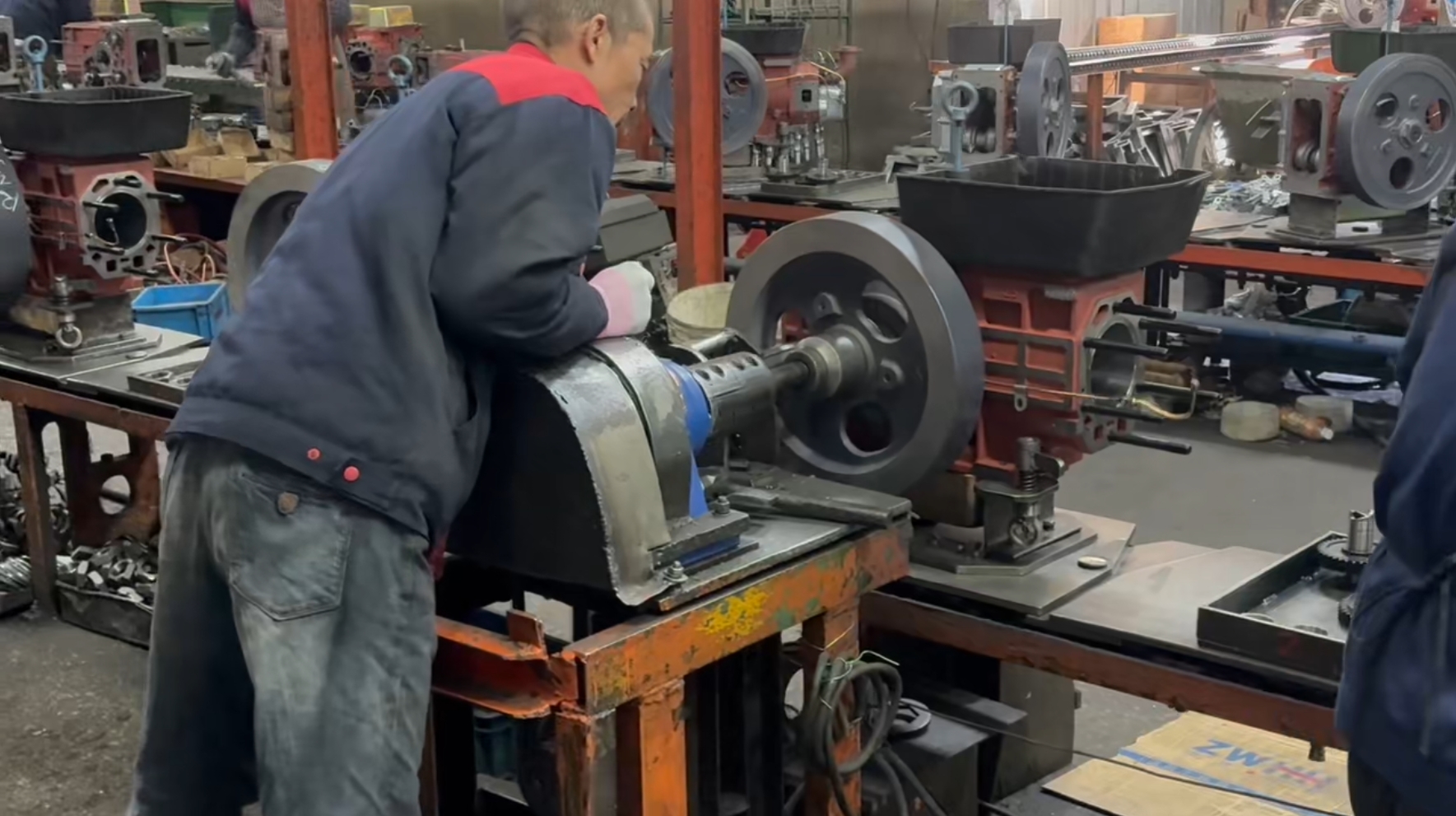
Torque-controlled tightening of flywheel and cylinder head bolts: an assembly parameter that affects compression retention, oil tightness, and long-term reliability.
Fuel Tank Capacity and Refuelling Interval
Tank capacity sets how long the machine runs between refuelling. The ZS1115 carries a 15 L fuel tank and the ZS1135 a 17 L tank. Read alone, these numbers say little; read together with specific fuel consumption and the machine's duty cycle, they define the operating interval — which matters most for irrigation diesel engine applications where refuelling interrupts the work.
Construction Materials
Material lists are a service-life and repairability indicator. In the configurations documented here, the cylinder block is cast iron, the crankshaft is steel, and the cover is aluminium alloy. Cast iron provides thermal stability and bore rigidity, which supports long service life at the cost of weight. A steel crankshaft carries cyclic loading. An aluminium cover reduces weight. For buyers whose end users rebuild engines rather than replace them, material specification is as relevant as rated power.
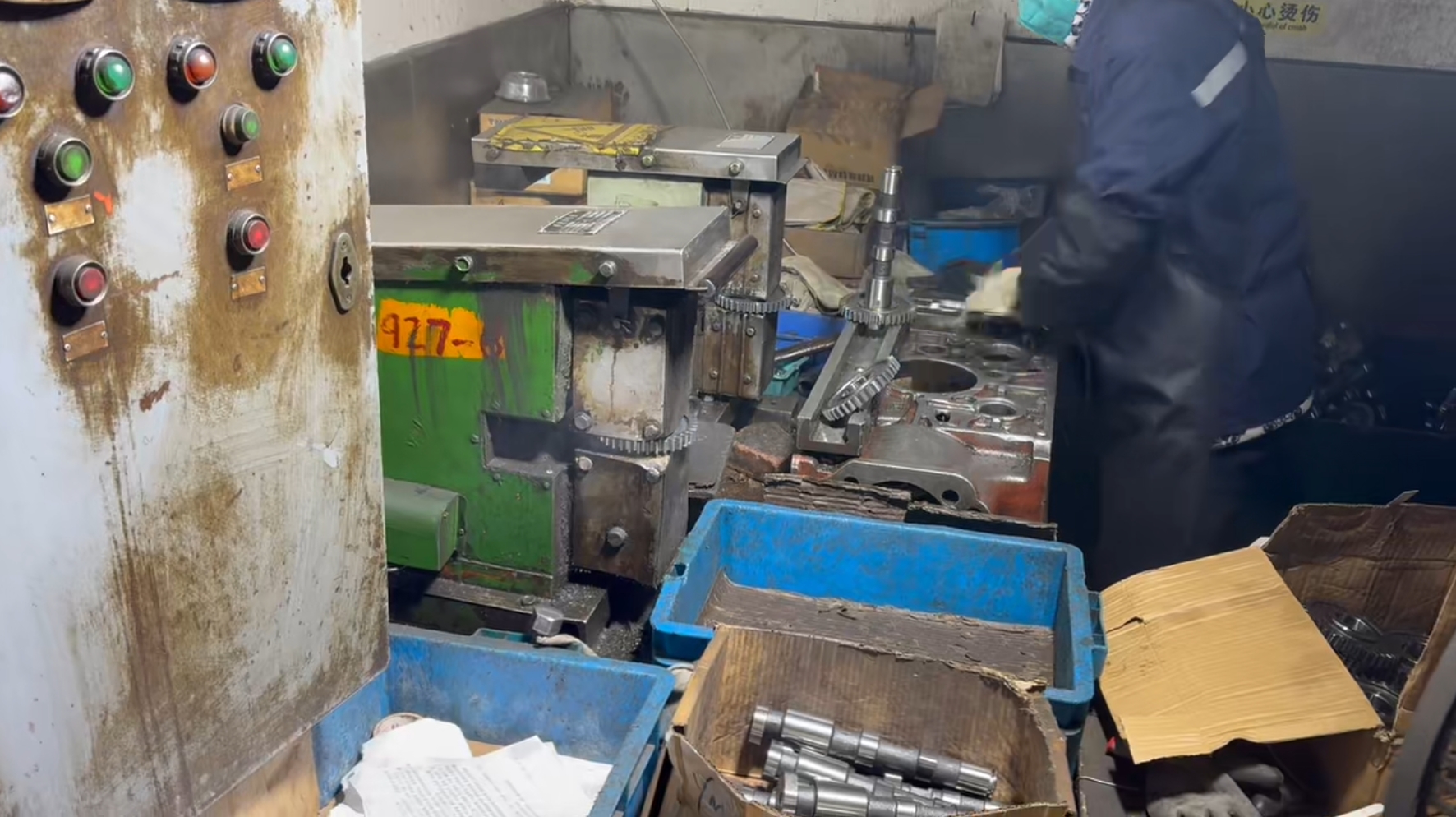
Camshaft assembly: valve timing is fixed at build, which is why specification parameters must be matched before production rather than corrected afterwards.
Supply-Side Parameters That Belong on the Same Sheet
Technical parameters decide whether an engine fits the machine. Supply parameters decide whether it reaches the machine. For the Willson range, the documented position is:
- Production mode: OEM / ODM, with customization of package, logo, and nameplate.
- Monthly capacity: 10,000 units.
- Lead time: 25–45 days.
- Minimum order quantity: one 20 ft container.
- Quality control: 100% test.
- Delivery terms: FOB / EXW.
- Payment terms: 30/70.
- Acceptance criteria: video or image verification.
- After-sales: remote support.
- Certification: GB/T 19001-2016 / ISO 9001:2015, certificate number 02925Q3D160R6M, issued by Jiangsu Jiuzhou Certification Co., Ltd., valid from 2025-05-10 to 2028-05-09, covering the production and sales of single-cylinder diesel engines and diesel engine accessories (fuel tank assembly, muffler, air filter assembly).
Knocked-down supply is a further parameter for distributors and regional assemblers. Diesel Engine SKD (Semi-Knocked Down) and Diesel Engine CKD (Complete Knocked Down) supply solutions allow part of the assembly work to move to the destination market. Industry sources report tariff advantages for this approach in several ASEAN markets — CKD rates of approximately 1.5%–3% in Myanmar and 0% for some categories in Thailand (KAMA Auto / International Journal of Research). Because tariff schedules change, current rates should be confirmed with a customs broker rather than taken from any published summary.
How to Read a Spec Sheet in Six Steps
- Define the duty point before reading any specification. Write down the load type (pump, tiller, generator, thresher, rice mill), the hours per day, the number of starts per day, the ambient conditions, and whether the installation is enclosed.
- Size displacement and power from torque at operating speed. Match the engine to the torque required at the speed the machine runs, then check whether rated power at rated speed supports it. Select displacement first; power follows from it.
- Fix the cooling method from duty cycle and environment. Continuous duty, high ambient temperature, or enclosed installation points to water cooling. Intermittent duty, portability, or dust-heavy sites with limited maintenance access points to air cooling.
- Choose the starting system from operator and climate. Frequent starts and cold conditions favour an electric start diesel engine configuration; remote sites with no reliable electrical maintenance favour hand-start.
- Compare consumption and tank capacity together. Use g/kW·h figures to compare efficiency at the rated point, and tank volume to estimate the refuelling interval of the finished machine.
- Verify compliance, construction, and supply parameters before releasing the order. Check the certificate number, issuing authority, validity dates, and whether the certificate scope covers the exact product and accessories being purchased. Confirm lead time, minimum order quantity, customization requirements, acceptance criteria, and payment terms in writing.
Use Cases: Matching Parameters to Real Duty Cycles
Irrigation Pumping — Continuous Seasonal Duty
A documented reference case involves 96 sets of the ZS1115 supplied to an agricultural irrigation application in Pakistan. The units have been in service for 10 years with no major failures, and irrigation-season requirements were met. The recorded highlights are a fuel-efficient design, easy maintenance, and adaptation to local harsh environments.
Read against the parameters above, the configuration is coherent: 20 HP at 2200 rpm, 1.195 L displacement, water-cooled for sustained operation, hand-start for a site without dependable electrical infrastructure, 254.2 g/kW·h fuel consumption, and a 15 L tank. For a diesel engine for irrigation pump duty, the parameters that carry the decision are thermal stability and fuel consumption over hundreds of operating hours — not peak power.
Power Tillers and Farm Machinery
Tiller duty is intermittent but torque-hungry, and it happens in dust. The parameters that decide the match are displacement and bore × stroke (torque at working speed) and cooling method. A diesel engine for tiller or diesel engine for farm machinery application typically benefits from torque-biased geometry and a cooling arrangement that survives dust — either air cooling with routine fin cleaning, or water cooling with a radiator protected from crop debris.
Generator Sets
A diesel engine for generator duty is judged differently: speed stability under applied electrical load, cooling capacity for continuous operation, and specific fuel consumption. Starting system choice follows the usage pattern — a standby set started occasionally is a different requirement from a prime-power set started daily.
Threshers and Rice Mills
Processing equipment runs long, steady loads in fixed installations. A diesel engine for thresher or diesel engine for rice mill duty is selected on displacement matched to a constant load, water cooling for continuous operation, and fuel consumption per unit of work. In these applications, consumption and spare-part availability usually outweigh any advantage in peak power.
Water Pumps and Construction Equipment
Portable pump sets and small construction machinery favour lower weight and independence from site electrical supply. A diesel engine for water pump duty on a construction site is often specified air-cooled with hand-start precisely because it must operate without a battery or coolant service.
Comparison Table: Two Configurations, Read Parameter by Parameter
The table below applies the reading sequence to two configurations from the same range. Every value is a documented specification for the listed model.
| Parameter | ZS1115 | ZS1135 |
|---|---|---|
| Engine type | Horizontal 4-stroke water cooled diesel engine | Horizontal 4-stroke water cooled diesel engine |
| Starting system | Hand-start | Hand-start |
| Rated power | 20 HP | 35 HP |
| Rated speed | 2200 rpm | 2200 rpm |
| Bore × stroke | 115 × 115 mm | 132.5 × 125 mm |
| Displacement | 1.195 L | 1.73 L |
| Fuel consumption | 254.2 g/kW·h | 252.7 g/kW·h |
| Oil consumption | 2.14 g/kW·h | 2.14 g/kW·h |
| Fuel tank capacity | 15 L | 17 L |
| Cylinder block material | Cast iron | Cast iron |
| Crankshaft material | Steel | Steel |
| Cover material | Aluminium alloy | Aluminium alloy |
| Applicable industry | Agricultural equipment, engineering equipment, power generation equipment | Agricultural equipment, engineering equipment, power generation equipment |
The practical reading: both models share the same cooling method, starting system, speed rating, and material strategy. The meaningful difference is displacement and the power it supports. A buyer who needs more head and flow at the same duty point moves up in displacement; a buyer who needs the same torque in a lighter package stays with the smaller unit and matches the driven equipment instead.
A second way to read the same sheet is to work backwards from the decision each parameter supports.
| Parameter | What it controls | Question to resolve before ordering |
|---|---|---|
| Displacement | Torque ceiling and load capacity | What is the heaviest load the engine must start and carry? |
| Compression ratio | Ignition reliability, cold starting, structural load | What is the lowest ambient temperature at which the machine must start? |
| Rated power and speed | Match to the machine's duty point | At what speed does the driven equipment actually run? |
| Cooling method | Continuous load capability and maintenance burden | Is the duty continuous or intermittent, and who maintains it? |
| Starting system | Operator requirement and deployment location | How many starts per day, and is there battery support on site? |
| Fuel and oil consumption | Running cost and wear monitoring | How many hours per season will the engine run? |
| Fuel tank capacity | Refuelling interval | Can refuelling interrupt the work cycle? |
| Materials | Service life and rebuildability | Will the end user repair or replace the engine? |
FAQ
Which certification should I verify before ordering a single cylinder diesel engine?
Verify a quality management system certificate that names the product, not only the company. Willson single cylinder diesel engines are covered by GB/T 19001-2016 / ISO 9001:2015 certificate number 02925Q3D160R6M, issued by Jiangsu Jiuzhou Certification Co., Ltd., valid from 2025-05-10 to 2028-05-09. The scope covers the production and sales of single-cylinder diesel engines and diesel engine accessories, specifically the fuel tank assembly, muffler, and air filter assembly. For engines intended for the United States, note that U.S. EPA Tier 4 regulates particulate matter and nitrogen oxides for off-highway diesel engines and exempts engines under 24 horsepower — confirm which category applies to your power rating before ordering.
Can a single cylinder diesel engine be supplied under our own brand and packaging?
Yes. OEM and ODM production is available, with customization of package, logo, and nameplate. The documented monthly capacity is 10,000 units, and 100% testing is applied before shipment, which matters when a private-label program depends on consistent output rather than on a single sample.
What commercial terms apply, and what drives the cost of a configuration?
The minimum order quantity is one 20 ft container. Delivery terms are FOB or EXW, and payment terms are 30/70. The specification itself drives the commercial outcome: displacement, cooling method, starting system, and the depth of customization (package, logo, nameplate) are the variables that change between quotations. This is why the parameter list should be frozen before quotations from different single cylinder diesel engine suppliers are compared.
How can I validate an engine before committing to a full container order?
Acceptance criteria are video or image verification, which allows the build to be checked against the agreed specification before shipment. Where a longer-term reference is useful, the documented case is a 10-year agricultural irrigation deployment in Pakistan using 96 sets of the ZS1115, where no major failures were recorded and irrigation-season requirements were met.
What is the production lead time, and how do I confirm it for a specific configuration?
Lead time is 25–45 days against a monthly capacity of 10,000 units. Actual timing depends on the configuration selected, any package or nameplate customization, and the position of the order in the production schedule. To confirm a lead time for a specific configuration and request a quotation, contact the Willson export team at khang@enginezoom.com or by WhatsApp on +86 166-5159-4277. The full product brochure is available here: Willson single cylinder diesel engine brochure.
Conclusion
Selecting a single cylinder diesel engine is a reading exercise before it is a buying exercise. Displacement and bore × stroke establish the torque ceiling. Compression ratio explains cold-start behaviour and structural loading. Rated power only means something at rated speed. Cooling method decides whether the engine can hold a duty cycle. Starting system decides who operates it. Fuel consumption in g/kW·h decides what it costs to run, and tank capacity decides how often the work stops.
The supply-side parameters belong on the same page: certification scope and validity, monthly capacity, lead time, minimum order quantity, customization options, acceptance criteria, and payment terms. A specification that answers the technical questions but leaves the supply questions open is only half a decision.
Willson is a single cylinder diesel engine manufacturer and supplier producing air-cooled and water-cooled engines from 3 to 45 HP for agricultural machinery, irrigation pumps, generator sets, and small construction equipment. Detailed technical specifications and the OEM/ODM supply program are available at enginezoom.com.
Put the parameters to work
Send the duty point — load, hours per day, starting requirements, and destination market — and the Willson team will return a configuration, a lead time inside the 25–45 day production window, and the acceptance criteria for first-article verification.
Email: khang@enginezoom.com | WhatsApp / Tel: +86 166-5159-4277 | Address: No. 28, Jinsheng East Road, Jintan, Jiangsu, China | Brochure: download the product catalog
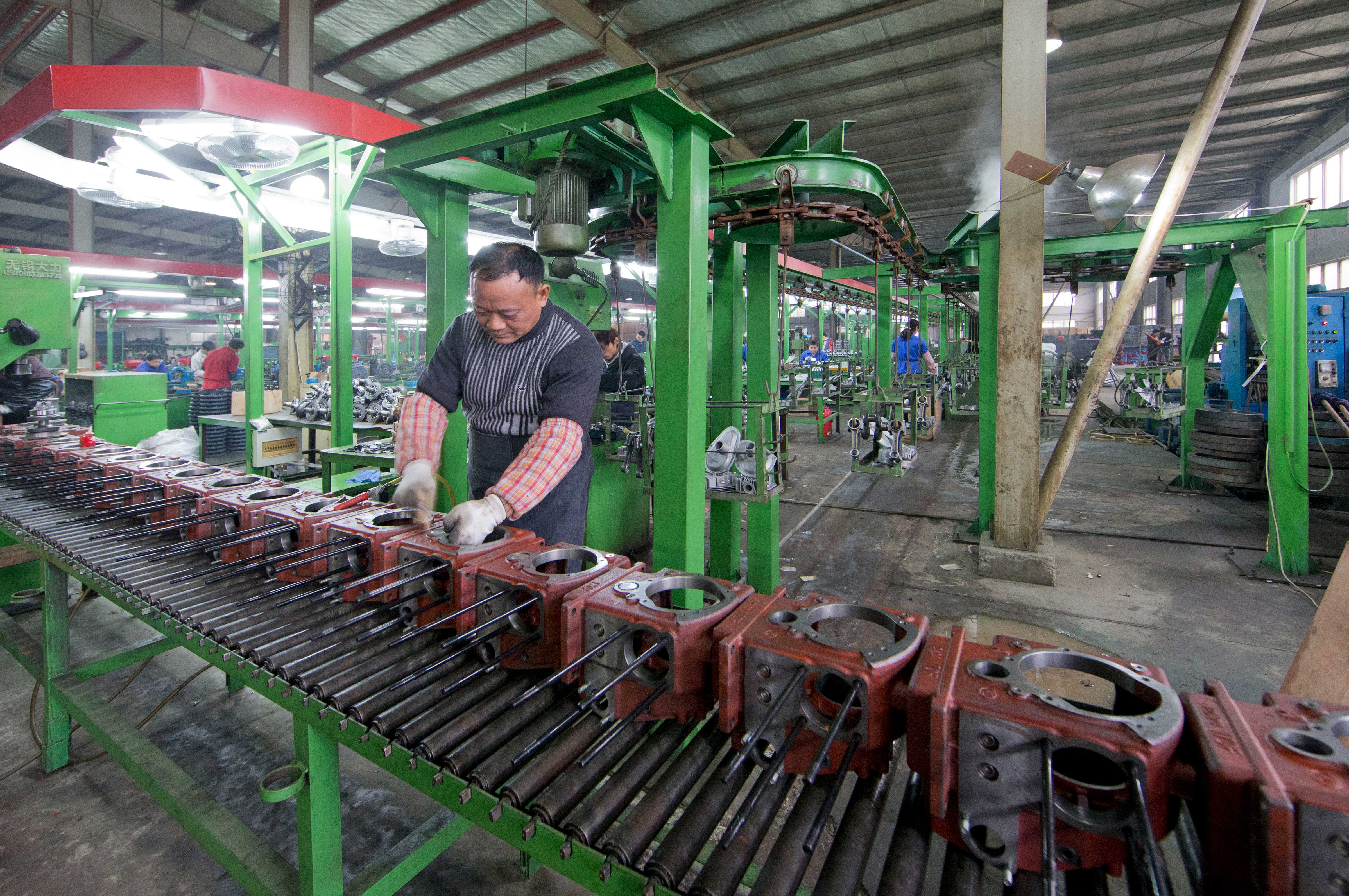
Production line for OEM/ODM single cylinder diesel engine orders, including SKD and CKD supply configurations.
Have Questions or Need More Details?
Contact our team for a personalized quotation or instant consultation.
Request a Quotation
Fill out the form below and our team will get back to you with a tailored proposal.
WhatsApp Direct Chat
Prefer to chat in real-time? Message us on WhatsApp for instant assistance & quick answers.
- Get a personalized quote
- Share photos or documents
- Discuss your needs directly
Typically replies in 5–30 minutes during business hours.