
Single Cylinder Diesel Engine Purchasing Terms Compared
Single Cylinder Diesel Engine Purchasing Terms & Acceptance Criteria: A Comparison Guide
Purchasing terms and acceptance criteria are the two halves of every single cylinder diesel engine contract. Purchasing terms define how an order is priced, paid, delivered, warranted and documented. Acceptance criteria define the measurable conditions the engine must satisfy before the buyer accepts the shipment and releases payment. A comparison that looks only at unit price hides both, which is why two quotations for the same 20 HP engine can differ substantially in real cost while looking almost identical on paper.
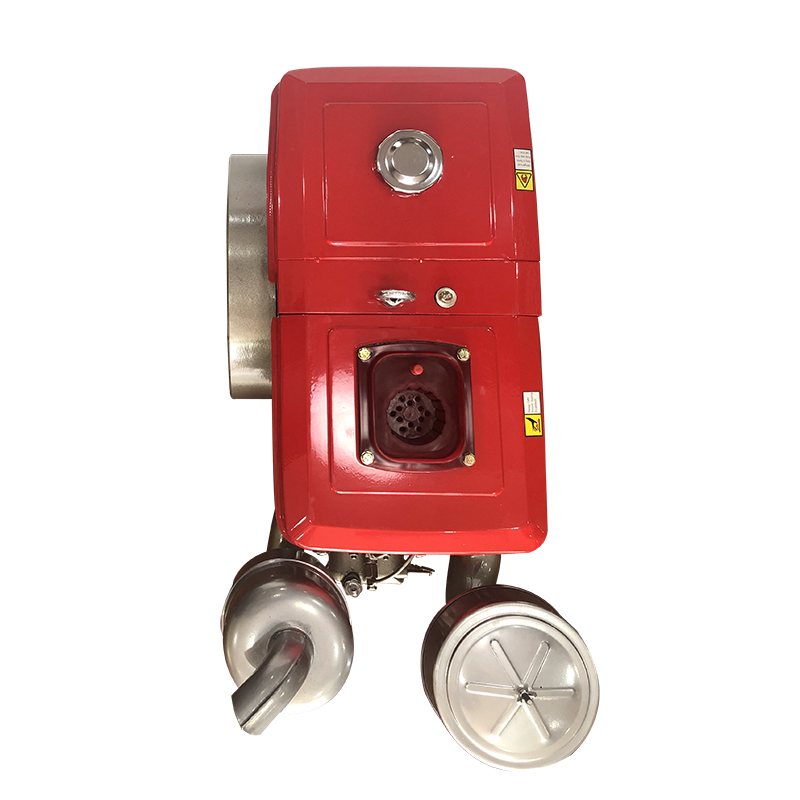
This guide is written for buyers who already know roughly what they need — an engine for a water pump, a power tiller, a thresher, a rice mill or a generator set — and who now have to decide whose terms to sign. It sets out the purchasing terms worth normalising, the acceptance criteria worth writing into a contract, and a comparison method that puts competing quotations on the same footing. The reference product throughout is the Willson single cylinder diesel engine range manufactured and exported by CHANGZHOU VISION INTERNATIONAL TRADING CO.,LTD, an engine manufacturer and exporter based in Jintan, Jiangsu, China.
Problem Definition: Why Two Quotations Rarely Compare
The purchasing question — what are the purchasing terms and acceptance criteria? — is almost never answered in one document. It is answered across a quotation, a specification sheet, a proforma invoice and a warranty statement, and the gaps between those four documents are where sourcing disputes begin. Three gaps decide whether two quotations can be compared at all.
- Scope gap. One quotation covers a bare engine; another includes a tool kit, a manual and a spare filter set. Until the scope is identical, the two prices are not describing the same product, and ranking them is meaningless.
- Value gap. A specification sheet states a rated power and a rated speed, but not always the displacement, fuel consumption or fuel tank capacity the buyer intends to check on arrival. Any value left out at quotation stage becomes negotiable at inspection stage — and negotiation at inspection stage is always more expensive than negotiation before the order.
- Remedy gap. Terms describe what happens when the order is correct. They rarely describe what happens when it is not: who pays for re-inspection, who absorbs the cost of replacement parts, and at which milestone payment stops being releasable.
A buyer who closes these three gaps does not necessarily need a different supplier. They need a better term sheet, and the same term sheet applied to every candidate. That is the entire method described below: normalise the terms first, then compare the numbers.
Industry Background: Why Terms Are Being Written More Carefully
Single cylinder diesel engines remain the default power source for small-scale mechanisation, and the commercial context explains why purchasing terms now receive more attention than they did a decade ago.
Global Growth Insights estimates the global single cylinder diesel engine market at approximately USD 3.34 billion in 2025, with a projected value of USD 3.74 billion by 2035. Dataintelo reports that agriculture accounted for approximately 42.3% of application share in 2025, and that Asia Pacific held a 58.2% revenue share in the same year. Published estimates for this segment diverge between research houses, so these figures are best read as directional context rather than as a basis for pricing or budgeting.
Trade flows point in the same direction. The Observatory of Economic Complexity records China's 2025 exports of combustion engines, including diesel variants, at USD 3.29 billion, with Russia, Vietnam and India among the major destinations. More destinations mean more contract structures: a buyer in Southeast Asia may be comparing a complete-unit shipment against an SKD or CKD assembly arrangement, and those structures do not carry the same acceptance procedure.
Regulation adds a third variable. U.S. EPA Tier 4 sets limits on particulate matter and nitrogen oxides for off-highway diesel engines and provides exemptions for engines under 24 horsepower. Because a single cylinder range commonly runs from a few horsepower to the mid-thirties, engine size and destination market both belong in the term sheet before any price is compared.
The Six-Term Comparison Framework
Six term families cover almost every point on which single cylinder diesel engine quotations differ. For each family, record the same fields for every candidate, in the same units, on the same page.
1. Commercial basis
Record the Incoterm, the named port or place, the currency and the validity period of the offer. Two offers at different Incoterms cannot be ranked until both are converted to the same delivery point, because the party carrying freight, insurance and import formalities differs in each case. Normalising this single field often reorders a shortlist before any technical question is discussed.
2. Delivery schedule and capacity evidence
A delivery date is a commitment; capacity is the evidence behind it. Willson's production base states an annual output of 100,000 units, with 95 employees and an export ratio of about 70%, serving South America, Africa, Southeast Asia and the Middle East. Record those numbers as context, then ask every supplier to break the schedule into named milestones: material release, assembly completion, pre-shipment inspection, documentation release and handover.
3. Quality acceptance procedure
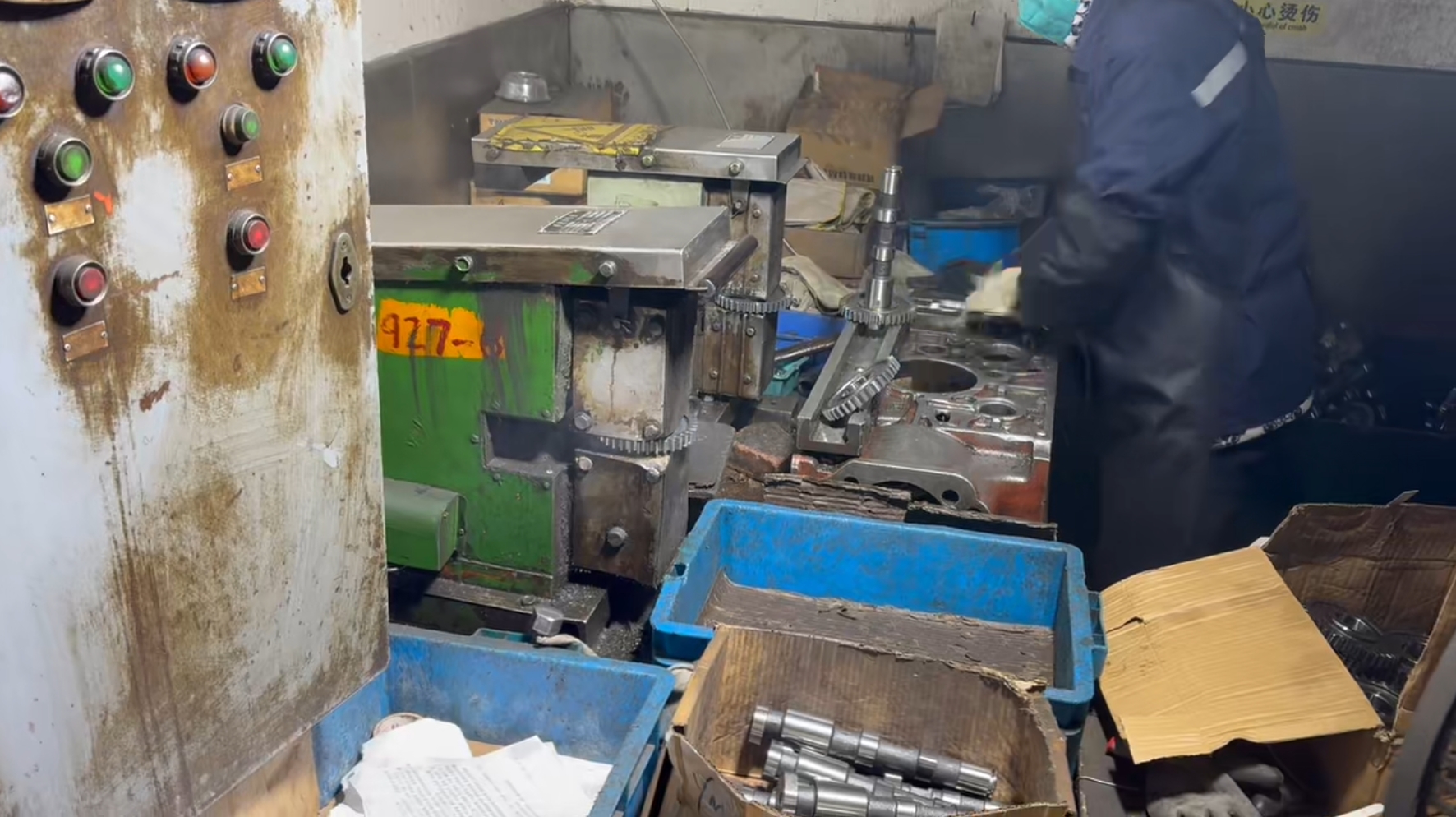
CHANGZHOU VISION INTERNATIONAL TRADING CO.,LTD holds ISO9001 quality management system certification and ISO14000 environmental management system certification. Certification establishes that a quality system exists; it does not define what a specific engine must measure. The acceptance procedure has to do that, and it is easier to write when the buyer knows which control points the factory already runs. On the Willson production line these include tightening of flywheel and cylinder head bolts with dedicated equipment, camshaft assembly, and a cylinder head cover oil-leak inspection.
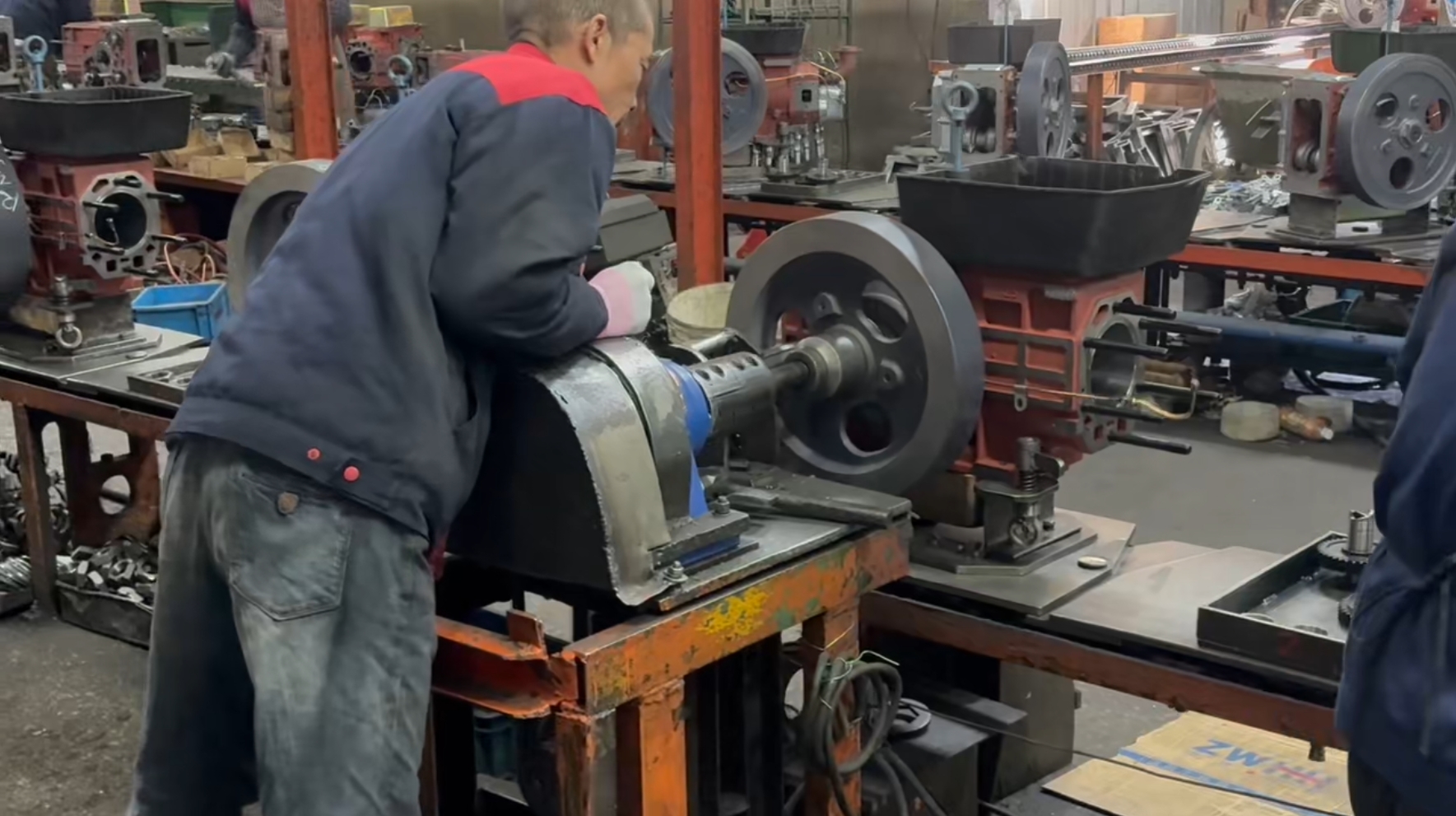
Convert those controls into inspection stages: an in-process check during assembly, a functional run before cleaning, and a pre-shipment check against the model's declared values. Each stage needs a release rule — pass, rework or reject — written before the order is placed, not after the first container is opened.
4. Technical conformity values
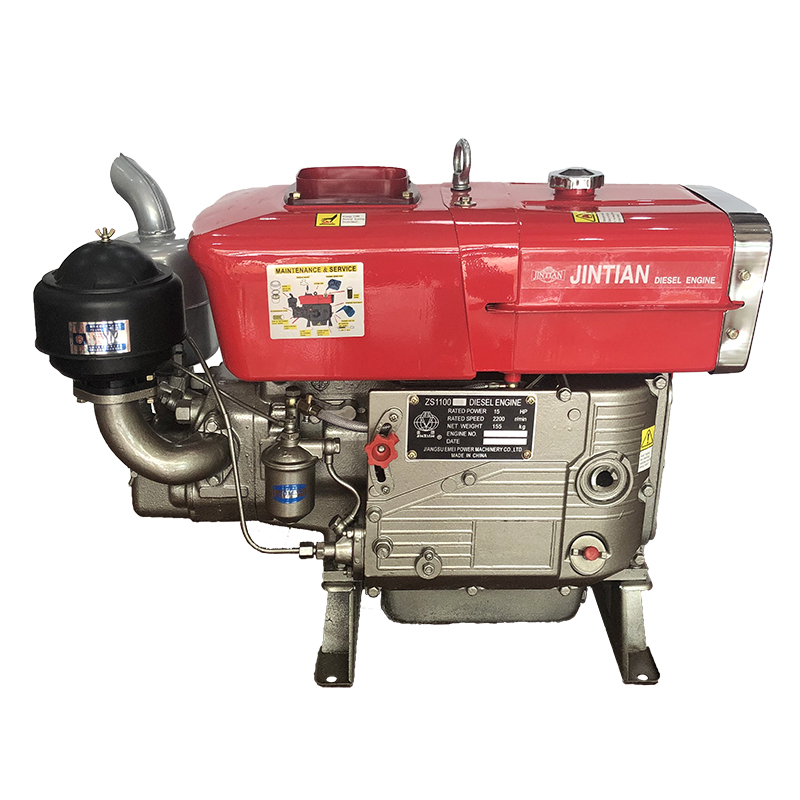
Acceptance values come from the model's own specification. For a Willson single cylinder diesel engine the declared fields include the starting system, rated power, rated speed, bore and stroke, displacement, fuel consumption, oil consumption and fuel tank capacity. Cooling type and material specification belong in the same list. The ZS-series listings specify a cast iron cylinder block, a steel crankshaft and an aluminium alloy cover; the smaller R, EM and 170F-series listings specify a heavy-duty cast iron cylinder block, a forged steel crankshaft, an alloy aluminium piston and a wear-resistant cylinder liner.
Two practical notes follow. First, every model in the current specification set is listed with a hand-start system, so an electric start diesel engine requirement has to be written into the term sheet and confirmed by the factory rather than assumed from a photograph. Second, an acceptance value without a measurement method is not a criterion: state whether fuel consumption is verified on a test bench or accepted from the declared figure.
5. Documentation, spares and after-sales
Define the document pack before shipment: operating manual, parts list, inspection record, and the certification copies the buyer needs for import clearance. Then define the maintenance obligations that keep the engine inside its warranty: regular cleaning, engine oil changes and filter element replacement when necessary, and — for water-cooled units — the prohibition on filling the tank with dirty, saline or alkaline water.
Warranty is the term most often compared by duration alone and most often disputed by scope. Compare what is covered, what voids coverage and how a claim is evidenced, not simply how many months are printed on the offer.
6. Supply structure
Complete-unit supply, SKD (semi-knocked down) supply and CKD (complete knocked down) supply are three different contracts, not three prices for the same contract. In SKD and CKD structures the acceptance procedure moves upstream: the buyer is accepting components and assembly instructions as much as finished engines, and local assembly quality becomes part of the outcome. Tariff treatment is part of the comparison as well. Published trade commentary on ASEAN assembly strategies reports CKD tariff treatment in Myanmar in the 1.5%–3% range and 0% treatment for some categories in Thailand; those figures are programme- and market-specific and should be confirmed with a customs broker for the actual destination before they are used in a costing.
Comparison Table: What to Record Side by Side
| Term dimension | Record this in the term sheet | What changes in the comparison |
|---|---|---|
| Commercial basis | Incoterm, named place, currency, offer validity | Converts a nominal price into a common delivery point |
| Payment milestones | Value released at order, pre-shipment inspection, document release and arrival | Determines when risk sits with the buyer rather than the seller |
| Delivery schedule | Named milestones with dates, not a single lead-time figure | Shows whether the date is supported by capacity evidence |
| Acceptance values | Model, starting system, cooling type, rated power, rated speed, bore and stroke, displacement, fuel and oil consumption, tank capacity | Turns a specification sheet into a pass/fail list |
| Inspection and release | Hold points, sampling basis, rework rule, signature authority | Defines the exact moment payment becomes releasable |
| Warranty and remedies | Covered components, void conditions, claim evidence, replacement route | Prevents duration-only comparison of warranty offers |
| Documentation and spares | Manual, parts list, inspection record, certification copies, first-interval spares | Sets the cost of ownership after arrival |
| Supply structure | Complete unit, SKD or CKD; assembly responsibility; tariff assumption | Changes both the acceptance procedure and the landed cost |
| Model | Cooling | Rated power | Rated speed | Bore × stroke | Displacement | Fuel consumption | Oil consumption | Fuel tank |
|---|---|---|---|---|---|---|---|---|
| ZS1135 | Water | 35 HP | 2200 rpm | 132.5 × 125 mm | 1.73 L | 252.7 g/kW·h | 2.14 g/kW·h | 17 L |
| ZS1115 | Water | 20 HP | 2200 rpm | 115 × 115 mm | 1.195 L | 254.2 g/kW·h | 2.14 g/kW·h | 15 L |
| ZS1100 | Water | 15 HP | 2200 rpm | 100 × 115 mm | 0.903 L | 269 g/kW·h | 2.14 g/kW·h | 12 L |
| ZS195 | Water | 13 HP | 2200 rpm | 95 × 115 mm | 0.815 L | 271.3 g/kW·h | 2.14 g/kW·h | 12 L |
| R180 | Water | 7 HP | 2600 rpm | 80 × 80 mm | 0.402 L | 292.7 g/kW·h | 3.57 g/kW·h | 5.5 L |
| Z175F | Air | 5 HP | 2600 rpm | 75 × 75 mm | 0.331 L | 301.4 g/kW·h | 4.31 g/kW·h | 6 L |
How to use Table 2: copy the row for the shortlisted model directly into the term sheet, then add the fields the table does not carry — starting system confirmation, cooling type, material specification for block, crankshaft and cover, and the measurement method used for fuel and oil consumption.
Step-by-Step Breakdown: Running the Comparison in Seven Steps
- Freeze the object of comparison. Fix the model, the starting system, the cooling type and the duty before requesting any price. A 20 HP water-cooled ZS1115 and an air-cooled 5 HP Z175F are not alternatives to one another; they are answers to different questions, and comparing them produces a decision nobody can defend later.
- Issue one term sheet, not a question list. Send the same fields to every supplier in the same units and require them to be returned in the same format. This is the single change that most improves comparability, because it removes the buyer's need to reconstruct missing fields from memory.
- Convert specifications into pass/fail values. Pull rated power, rated speed, bore and stroke, displacement, fuel and oil consumption and tank capacity from the model's own listing, as in Table 2, and mark each as a criterion with a tolerance and a measurement method.
- Write the inspection hold points and the release rule. Name the stages — in-process during assembly, functional run before cleaning, pre-shipment against declared values — and state who signs each release and what happens on failure.
- Validate with a sample or pilot order. Test the term sheet itself, not only the engine. If a criterion cannot be checked on a pilot order, it will not be checkable on a container order either.
- Reconcile the schedule against capacity and documentation evidence. Match the promised dates to the milestones in the term sheet and confirm that the document pack can be issued before the shipping deadline, not after it.
- Score, record and attach. Score each term family, keep the completed term sheet, and attach it as an annex to the purchase order so that the comparison and the contract describe the same obligations.
Use Cases: Where the Acceptance Emphasis Shifts
The term sheet does not change across applications; the emphasis inside it does. The same Willson engine range is specified for agricultural machinery, water pumps, generator sets and construction equipment, and each duty makes a different field decisive.
Agriculture, power tillers and farm machinery
For a diesel engine for tiller, power tiller or general farm machinery duty, installation conditions become acceptance-relevant. The manufacturer's stated operating conditions are a well-ventilated area, free from excessive dust and corrosive gases, protection from direct rain and installation on stable, solid ground. An engine that meets its rated power on a bench but is installed in a dust-filled enclosure has not been accepted under the conditions it will actually work in.
Irrigation and water pump duty
For an irrigation diesel engine or water pump application, add the water-quality clause to the term sheet: dirty, saline or alkaline water must not be added to the water tank. Pair that clause with the maintenance obligations — regular cleaning, engine oil changes and filter element replacement — because a warranty dispute in irrigation duty almost always turns on maintenance records rather than on the engine itself.
Threshers, rice mills and sideline processing
For continuous processing duty, fuel consumption moves from a catalogue field to a cost variable. The ZS-series models in Table 2 declare fuel consumption between 252.7 and 271.3 g/kW·h, while the smaller R180 and Z175F declare 292.7 and 301.4 g/kW·h respectively. Acceptance should reference the declared figure for the exact model ordered, together with the method used to confirm it.
Generator sets
For a diesel engine for generator duty, rated speed is the binding criterion, and it differs across the range: the ZS-series models in Table 2 run at 2200 rpm, while the R180 and Z175F run at 2600 rpm. Acceptance should confirm power at the rated speed the generator end requires, not simply the maximum power printed on the cover of a brochure.
Construction equipment, compressors and vessels
Construction equipment, air compressors and inland waterway vessels appear in the same application set, and all three place a premium on starting reliability and cooling adequacy. Those points belong in the pilot-order stage of the comparison rather than in a footnote of the quotation.
Distributor and assembly programmes
For importers building a distribution business on diesel engine SKD knocked down supply solutions or diesel engine CKD knocked down supply solutions, the acceptance procedure shifts upstream: component lists, assembly instructions and local assembly quality become the items being accepted. The commercial terms should reflect that shift, because the buyer is no longer inspecting only finished goods.
Frequently Asked Questions
Which documents should be attached to a single cylinder diesel engine acceptance inspection?
At minimum, four. First, the model specification sheet stating the starting system, rated power, rated speed, bore and stroke, displacement, fuel and oil consumption and fuel tank capacity. Second, the inspection record from the hold points agreed in the contract. Third, the manufacturer's certification — CHANGZHOU VISION INTERNATIONAL TRADING CO.,LTD holds ISO9001 quality management system and ISO14000 environmental management system certification. Fourth, the import documentation required by the destination market. Where the destination is the United States, note that EPA Tier 4 regulates particulate matter and nitrogen oxides for off-highway diesel engines and provides exemptions for engines under 24 horsepower, so engine size determines which route applies.
Can one supplier cover agricultural, pump and generator applications from a single range?
Yes, within a defined power band. Willson single cylinder diesel engines are offered as a 3–45 HP range in both air-cooled and water-cooled versions, and the models in the current specification set run from the 4 HP R170A to the 35 HP ZS1135, all listed with a hand-start system. The practical limit is not application type but duty: each application changes which values become acceptance criteria — rated speed for a generator set, fuel consumption for continuous processing duty, cooling type and ventilation for field machinery. The supplier's range answers the power question; the term sheet answers the application question.
How should budget be compared when payment and warranty terms differ?
Compare landed cost at an identical Incoterm first, then add the costs the terms themselves create: inspection at the agreed hold points, spares for the first service interval, and the exposure created by each payment milestone. A schedule that releases most of the value before pre-shipment inspection transfers risk to the buyer; a schedule tied to inspection and document release keeps it with the seller. Warranty should be compared by scope rather than duration — which components are covered, what voids coverage and how a claim is evidenced. Because no single number captures these differences, score each term family and keep the scorecard with the purchase order.
What should a sample or pilot order be checked against?
Against the values already written in the term sheet, not against a general impression. For a Willson single cylinder diesel engine that means the model's declared rated power, rated speed, bore and stroke, displacement, fuel and oil consumption and tank capacity, plus the starting system, the cooling type and the material specification for block, crankshaft and cover. The pilot should then run in the duty it was bought for — pump, tiller, thresher or generator set — under the installation conditions the manufacturer states: a well-ventilated area, free from excessive dust and corrosive gases, out of direct rain and on stable, solid ground. A sample that passes informally but is not recorded has not been accepted, only received.
How should delivery schedule and lead time be locked into the contract?
Convert the lead time into named milestones and attach a release rule to each: material release, assembly completion, pre-shipment inspection, documentation release and handover. Ask for the capacity evidence behind the dates — Willson's production base states an annual output of 100,000 units with 95 employees and an export ratio of about 70%, which is context for the schedule rather than a guarantee of it. Then link payment to those milestones so the schedule carries a commercial consequence. Buyers who want to test a schedule before committing to volume can start with a sample or pilot order and use the current catalogue and specification sheet as the baseline.
Conclusion
Comparing single cylinder diesel engine suppliers is not a pricing exercise; it is a documentation exercise. Once the same term sheet is applied to every candidate — commercial basis, payment milestones, delivery milestones, acceptance values, inspection releases, warranty scope, document pack and supply structure — the quotation numbers begin to mean the same thing, and the ranking that emerges is one a procurement team can defend to a plant manager, a distributor or an auditor.
Two habits carry most of the value. The first is converting the specification sheet into pass/fail values for the exact model ordered, because a general product description cannot be inspected. The second is writing the release rule before the order, because the only moment a buyer has real leverage over acceptance is before the payment schedule is signed.
Willson single cylinder diesel engines are produced by CHANGZHOU VISION INTERNATIONAL TRADING CO.,LTD in Jintan, Jiangsu, across a 3–45 HP range in air-cooled and water-cooled versions, with ISO9001 and ISO14000 certification behind the quality system. Whether the requirement is a small diesel engine for a water pump, an agriculture diesel engine for farm machinery, or a distributor programme built on SKD and CKD supply, the same principle applies: agree the terms, then agree the criteria, then sign.
Next Step: Sample, Quotation or Catalogue
If you are building a term sheet and need a baseline to compare against, request the current Willson specification sheet, or place a sample order and test it against the criteria in Table 2. The full product catalogue is available for download, and the export team can supply the model-level declarations you need to complete the acceptance section of your contract.
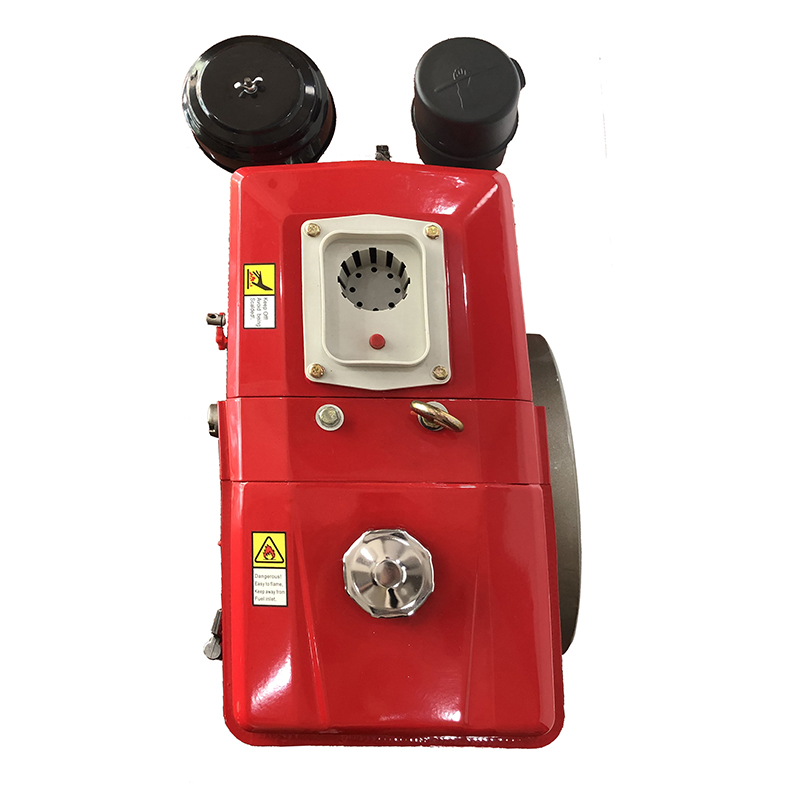
Catalogue (PDF): Download the Willson single cylinder diesel engine catalogue
Email: khang@enginezoom.com
Tel / WhatsApp: +86 166-5159-4277
WhatsApp enquiry: Send a message to the export team
Website: enginezoom.com
Have Questions or Need More Details?
Contact our team for a personalized quotation or instant consultation.
Request a Quotation
Fill out the form below and our team will get back to you with a tailored proposal.
WhatsApp Direct Chat
Prefer to chat in real-time? Message us on WhatsApp for instant assistance & quick answers.
- Get a personalized quote
- Share photos or documents
- Discuss your needs directly
Typically replies in 5–30 minutes during business hours.