
Long-Term Single Cylinder Diesel Engine Supplier Partnerships: Purchasing & After-Sales FAQ
Long-Term Single Cylinder Diesel Engine Supplier Partnerships: Purchasing & After-Sales FAQ
A second order is where a supplier relationship actually begins. The first container proves a factory can build and ship an engine. The repeat orders prove something much harder to manufacture: that purchasing terms, acceptance criteria, and after-sales obligations were written down and agreed before anyone needed them.
This article answers the questions global buyers raise most often when structuring a multi-year relationship with a single cylinder diesel engine manufacturer. It covers purchasing terms, acceptance criteria, and after-sales support in a question-and-answer format, using documented arrangements from Willson brand single cylinder diesel engines, produced by CHANGZHOU VISION INTERNATIONAL TRADING CO., LTD. The core anchor question throughout is a practical one: what are the purchasing terms and acceptance criteria, and what happens after the sale?
Why Long-Term Supply Relationships Break on Paper, Not on the Production Line
Most sourcing failures in this category do not happen on the first shipment. They happen between the first order and the second, when two parties discover they were operating from different assumptions about price, acceptance, or support.
Three failure points repeat across buyer-supplier relationships in the small diesel engine category:
- Purchasing terms that were never committed to writing. Price, quantity structure, customization scope and lead time live in email threads rather than in a document both sides can point to.
- Acceptance criteria that exist only in one party's head. The buyer expects a torque check; the supplier considers a start-up test sufficient. Nobody defined the boundary in advance.
- After-sales responsibility that gets renegotiated after the first problem. When a fault appears in month nine, the conversation is no longer about engineering — it is about who pays.
These are not abstract risks. Single cylinder diesel engines typically sit behind irrigation pumps, tillers, threshers and small generator sets, where equipment downtime lands directly on an operating season. A dispute over a second shipment is measured in lost harvest days, not in paperwork.
The fix is not more trust. It is earlier specificity.
Industry Background: Why Supplier Discipline Matters More Than Supplier Availability
Demand for single cylinder diesel engines remains concentrated in agriculture and in markets that rely on small, repairable, fuel-efficient power. According to data published by Dataintelo, agriculture accounted for approximately 42.3% of single cylinder diesel engine application share in 2025, and Asia Pacific held roughly 58.2% of regional revenue share in the same year.
The supply side is equally broad. The Observatory of Economic Complexity (OEC) records that China exported USD 3.29 billion of combustion engines in 2025. In the small diesel engine segment specifically, Intel Market Research lists established international manufacturers including Yanmar, Kubota, Kohler and Hatz, alongside Chinese manufacturers such as Changchai and Shifeng Group.
Combine those two facts and the strategic picture becomes clear: buyers are not short of options, and suppliers are not short of buyers. In that environment, a partnership is not earned through scarcity. It is earned through the predictability of terms.
One regulatory detail reinforces this. U.S. EPA Tier 4 emission standards regulate particulate matter (PM) and nitrogen oxides (NOx) for off-highway diesel engines, with exemptions for engines under 24 horsepower. For buyers distributing into regulated and unregulated markets from the same supplier, the compliance conversation has to happen at the specification stage — not at the port.
Purchasing Terms: The Questions Buyers Ask Before Committing
What are the purchasing terms for a long-term single cylinder diesel engine supplier relationship?
A workable long-term purchasing framework covers six items, each in writing:
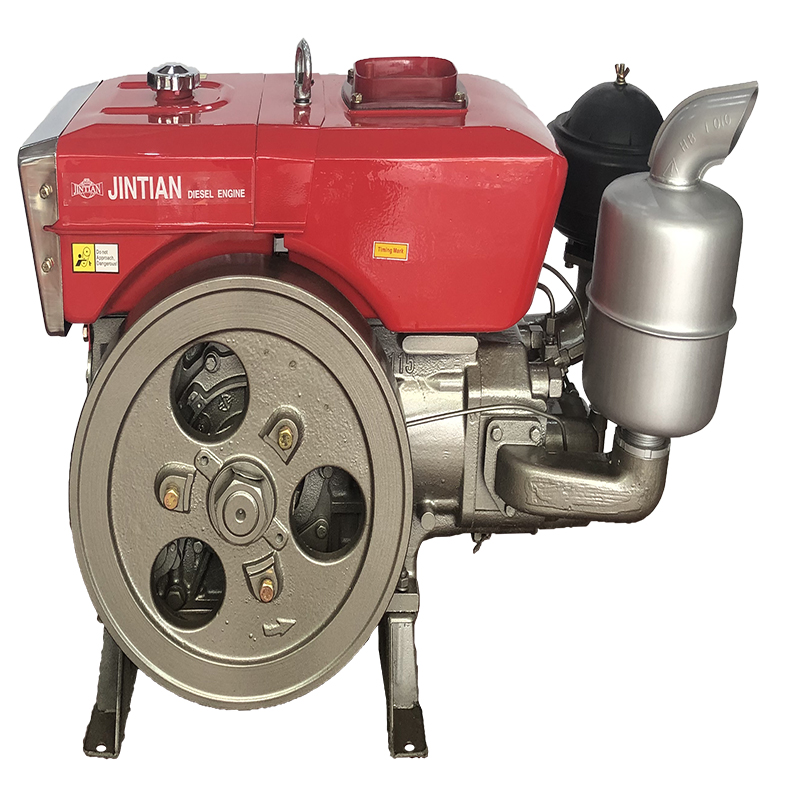
- Product identity. Model, cooling type (air cooled or water cooled), starting system, rated power and rated speed. A model number alone is not sufficient — the same series can ship in different cooling and start configurations.
- Customization boundary. What the supplier will change and what stays fixed. In arrangements of this type, the documented customization scope is package, logo and nameplate.
- Quantity structure. The minimum order quantity and how it interacts with repeat ordering. The documented minimum order is 1 × 20 ft container.
- Capacity and lead time commitment. Monthly output, and the production window per order. Documented figures are a monthly capacity of 10,000 units and a lead time of 25–45 days.
- Acceptance process. Who tests, what is tested, when it is tested, and what record the buyer receives. The documented quality control standard is 100% test.
- After-sales and spare parts provision. Who is responsible, through which channel, and for how long.
Decision rule: if a term cannot be located in a signed document, treat it as undefined. Undefined terms are the ones that get renegotiated at the worst possible moment.
How do OEM and ODM arrangements differ in this category?
OEM / ODM is the documented production mode for this class of supply. For long-term buyers, the practical issue is not the label but the boundary: which elements can be changed, and which remain fixed to the base platform.
Under the documented arrangement, customization covers package, logo and nameplate. Buyers whose branding requirement falls inside that boundary can plan around it directly. Buyers whose requirement falls outside it should confirm the scope before negotiation rather than after the first production run, because a capability that has not been agreed is not a capability the buyer can schedule against.
How reliable are capacity and lead time commitments?
Capacity is only meaningful in relation to output. This supplier documents a monthly capacity of 10,000 units against an annual output of 100,000 units. A long-term buyer is effectively reserving a share of monthly output rather than competing for whatever remains after a production run.
Lead time of 25–45 days is a production window, not a delivery date. Buyers planning irrigation or harvest-season deployment should build the range into their own scheduling — and should agree in advance how the upper end of that range is handled when it occurs.
Acceptance Criteria: What Gets Checked, and What the Buyer Should Verify
What are the acceptance criteria for a single cylinder diesel engine order?
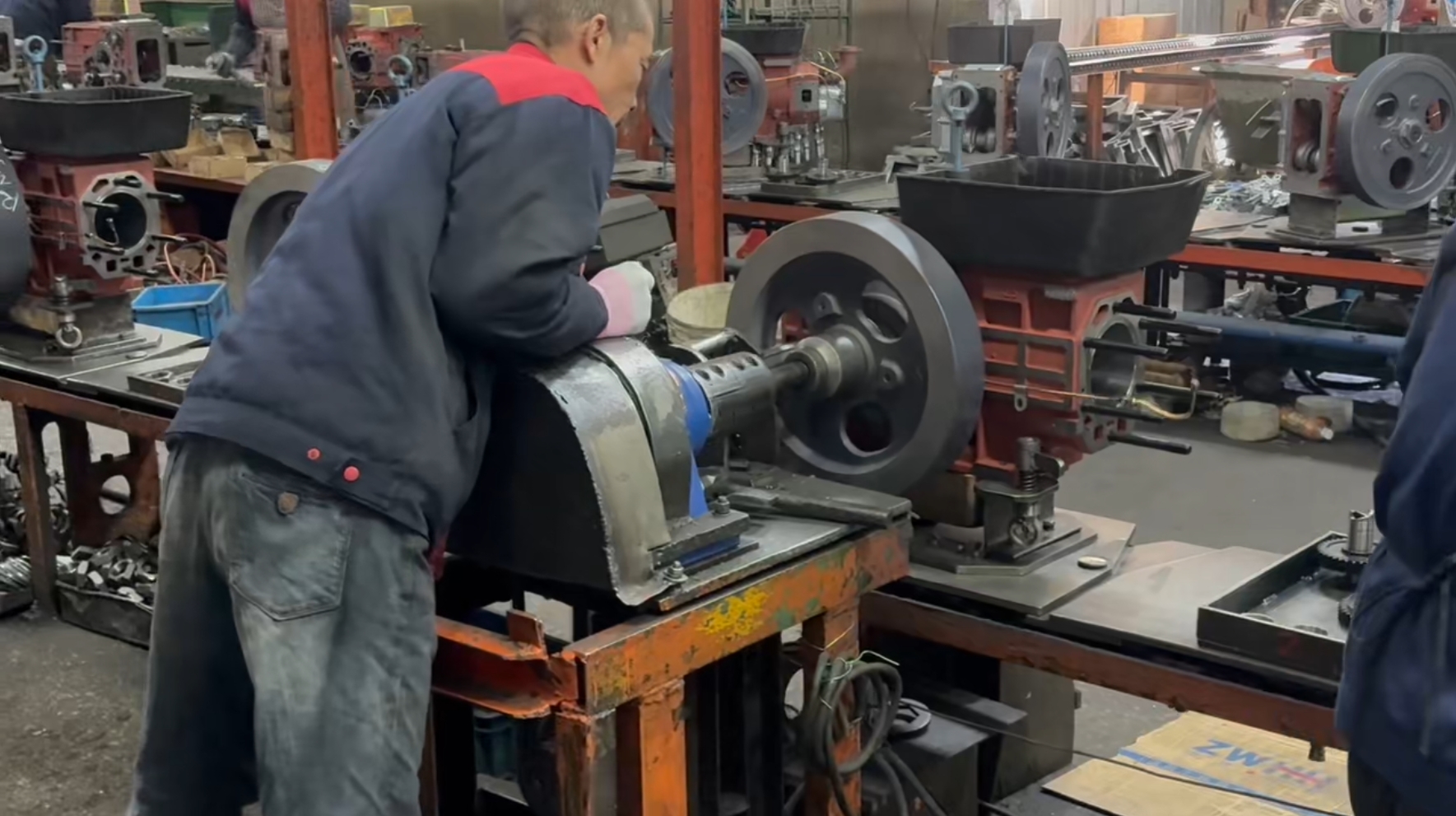
The documented acceptance baseline is 100% test. In practice, that commitment means three things a buyer should hold the supplier to:
- Every unit, not a sample. A 100% test standard applies to the full order quantity, not to a representative batch.
- A test record, not a statement. Acceptance depends on results the buyer can review — a shipment-level claim of "all tested" is a description, not evidence.
- A pre-agreed scope. "100% test" only carries weight when both parties have agreed what is tested and against which values.
Which specifications should the buyer independently verify against the nameplate?
For a horizontal single cylinder diesel engine, the spec sheet and the delivered unit should agree on all of the following. Buyers should treat each as an acceptance item, not a marketing line:
- Rated power and rated speed
- Bore × stroke
- Displacement
- Fuel consumption
- Fuel tank capacity
- Cooling type (air cooled or water cooled)
- Starting system
Take the ZS1115 as a worked example: 20 HP, 2200 rpm, bore × stroke of 115 × 115 mm, displacement 1.195 L, fuel consumption 254.2 g/kW-h, fuel tank capacity 15 L, water cooled, hand start. Each of those values is a verifiable checkpoint. Collectively they define what the buyer paid for.
After-Sales: What Actually Happens After the Container Ships
How is after-sales support organised for overseas buyers?
The documented after-sales model is remote support. For an overseas buyer, that carries both a capability and a limitation, and both should be understood before signing.
The capability: a support channel exists that does not depend on the buyer's local market having a dealer network. The limitation: remote diagnosis depends on how well the buyer can describe the fault. Photographs, running hours, fuel and oil records, and load conditions do most of the diagnostic work. Buyers who keep those records resolve issues faster than buyers who do not.
This is why buyers should agree on the reporting format at the same time as they agree on the engine. Support is only as fast as the information that reaches it.
What does a durable after-sales relationship look like in practice?
Long service life in this category is a maintenance outcome, not a design accident. A documented case from Pakistan illustrates the pattern: an agricultural irrigation operator running 96 units of the ZS1115 over a 10-year period recorded no major failures and met irrigation season requirements throughout. The recorded success factors were a fuel-efficient design, ease of maintenance, and suitability for harsh local conditions.
Read that list again. Two of the three factors describe daily operation by the buyer, not factory capability. The third — adaptation to harsh environments — was validated by the same buyer over a decade. An after-sales relationship is durable when the equipment is maintainable and the buyer is set up to maintain it.
Step-by-Step: From First Inquiry to Repeat Order
Buyers who convert a first order into a multi-year relationship tend to follow a similar sequence.
- Define the application, not the engine. Irrigation pump, tiller, thresher, rice mill or generator set — the duty cycle determines the horsepower band, the cooling type and the starting system. Matching the application first avoids an expensive re-selection later.
- Shortlist by power band. The Willson range spans 3–45 HP across air-cooled and water-cooled series, which is wide enough to serve most small agricultural and industrial duties without a custom build.
- Confirm the customization boundary. Agree package, logo and nameplate treatment up front so the branding conversation does not reopen mid-production.
- Write the acceptance scope. Specify which parameters are verified, at which stage, and what record the buyer receives.
- Agree lead time handling. Fix the 25–45 day window and decide in advance how the upper bound is managed.
- Place the minimum order. A documented minimum of 1 × 20 ft container is the natural validation run for a new relationship.
- Verify at arrival. Check the delivered units against the nameplate values before the first unit enters service.
- Establish the reporting baseline. Record running hours, fuel and oil consumption, and fault history from day one. This is the dataset that makes remote support effective.
- Convert to a repeat schedule. With one cycle of accepted quality and documented service behind it, both sides have something concrete to plan the second order against.
Use Cases: Where Long-Term Supply Relationships Are Built
The application determines which terms matter most. Across the markets this supplier serves — South America, Africa, Southeast Asia and the Middle East — the pattern is consistent enough to generalise.
- Agricultural irrigation. Long continuous running, seasonal deadlines, dust and variable fuel quality. Lead time and maintenance access matter more than peak power. The Pakistan irrigation case is the reference example.
- Generator sets. Standby duty with irregular starts. Acceptance testing and cold-start reliability carry the highest weight.
- Tillers and farm machinery. Frequent load variation and rough handling. Component durability and spare part continuity dominate.
- Rice mills and threshers. Sustained load during harvest windows. Fuel consumption values become an operating cost line rather than a spec sheet detail.
- Water pumps. Simple, repetitive, high-uptime duty. Units per container and per-unit consistency drive the economics.
In every one of these, the buyer's exposure to risk is concentrated in the same three areas: delivery timing, acceptance clarity, and after-sales response.
Comparison: Supply Models for a Long-Term Agreement
Supply format is one of the few purchasing terms that changes both the landed cost and the buyer's own operational burden. The documented options break down as follows.
| Supply model | What arrives | Best suited to | Documented logistics note |
|---|---|---|---|
| Complete unit | Fully assembled, 100% tested single cylinder diesel engines | First-time buyers, distributors, dealers replacing a working fleet | Minimum order 1 × 20 ft container; production lead time 25–45 days |
| SKD (semi-knocked down) | Major components shipped as partial assembly kits | Buyers with some local assembly capability who want to reduce landed cost | Partially disassembled supply can fall into a lower customs tier in some ASEAN markets |
| CKD (complete knocked down) | Full component kits for local final assembly | Buyers with an assembly line, long-term volume plans, or local-content requirements | Reported tariffs of 1.5%–3% for CKD in Myanmar, and 0% for some categories in Thailand (KAMA Auto / International Journal of Research) |
For most buyers beginning a relationship, the complete-unit route is the practical starting point: it closes the acceptance question fastest, because a fully tested engine is a directly verifiable deliverable. Knocked-down formats become viable once volume, local capability and tariff structure justify the added assembly responsibility.
Frequently Asked Questions
What certifications support a long-term single cylinder diesel engine commitment?
The documented certifications are ISO9001 quality management system certification and ISO14000 environmental management system certification. For buyers exporting into regulated markets, these should be read alongside destination rules rather than instead of them — for example, U.S. EPA Tier 4 regulates particulate matter and nitrogen oxides for off-highway diesel engines, with an exemption for engines under 24 horsepower. The compliance question to settle with any supplier is which certification documents the buyer will receive, and whether those documents satisfy the destination market.
Can one supplier support both complete units and long-term volume growth?
Documented capability in this case includes an annual output of 100,000 units and a monthly capacity of 10,000 units, with OEM / ODM as the production mode and 100% test as the quality control standard. Export share is 70%, with main markets in South America, Africa, Southeast Asia and the Middle East. Taken together, these figures describe a supplier sized for repeat volume rather than one-off sales — but the specific capacity reservation for a given buyer still has to be stated in the agreement.
What is the minimum order and how do the commercial terms work?
The documented minimum order quantity is 1 × 20 ft container, with a production lead time of 25–45 days. Customization is available within a defined boundary covering package, logo and nameplate. Buyers planning a multi-year relationship should treat these as the fixed commercial frame, and negotiate volume scheduling, delivery windows and documentation expectations around them.
How does a buyer validate quality before committing to repeat orders?
Validation rests on three documented elements rather than on a separate sampling tier: a 1 × 20 ft container minimum order, a 100% test standard applied to the full quantity, and a verifiable specification set that buyers can check against the nameplate on arrival — rated power, rated speed, bore × stroke, displacement, fuel consumption, tank capacity, cooling type and starting system. For relationship-building purposes, the first container functions as the validation run. A buyer should settle the acceptance scope and the documentation format before that container is produced, because those two agreements are what make the second order straightforward.
How long does production take, and how is after-sales handled after delivery?
Production lead time is documented at 25–45 days from confirmation. After delivery, support is provided on a remote support model. In practice this means buyers resolve issues fastest when they maintain clear records of running hours, fuel and oil consumption, load conditions and fault history — the same discipline that underpins the 10-year, 96-unit irrigation record from Pakistan. Buyers who want terms aligned to their own application can request a quotation and a specification-matched terms document from Willson single cylinder diesel engines as the first step.
Building a Partnership on Documented Terms
A long-term single cylinder diesel engine partnership is not built on a better price. It is built on a buyer and a supplier agreeing, in writing and in advance, on what is being bought, how it will be accepted, and who is responsible when something goes wrong.
The documented terms that make that possible in this category are unremarkable but specific: a 1 × 20 ft container minimum order, a 25–45 day production lead time, a 100% test standard, OEM / ODM production with customization limited to package, logo and nameplate, remote after-sales support, and ISO9001 and ISO14000 certification. Ten thousand units of monthly capacity and 100,000 units of annual output mean the volume side of the equation is rarely the constraint.
The constraint is almost always clarity. Buyers who settle the acceptance scope before production, and who build a service record from the first running hour, are the ones whose second order is a formality rather than a negotiation.
Next Step: Terms Built Around Your Application
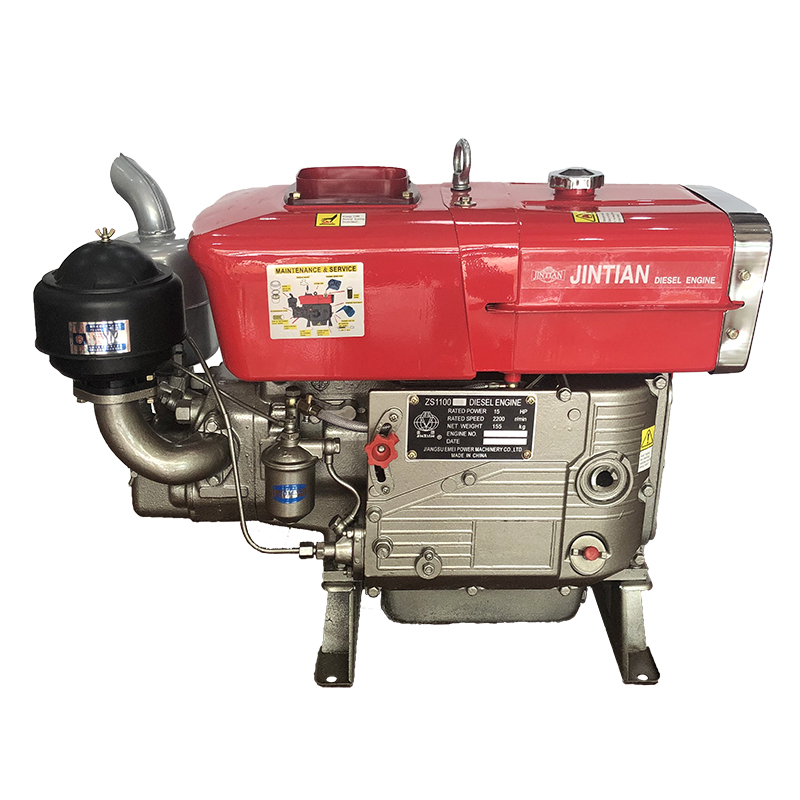
Every partnership starts with one specific question answered properly. If you want purchasing terms, acceptance criteria and after-sales arrangements set out against your own application — irrigation pump, tiller, thresher, rice mill or generator set — the next step is a direct conversation.
Request a quotation and a specification-matched terms document from Willson single cylinder diesel engines, produced by CHANGZHOU VISION INTERNATIONAL TRADING CO., LTD.
Email: khang@enginezoom.com
WhatsApp / Tel: +86 166-5159-4277
Website: enginezoom.com
Download the full product brochure: Willson single cylinder diesel engine catalogue (PDF)
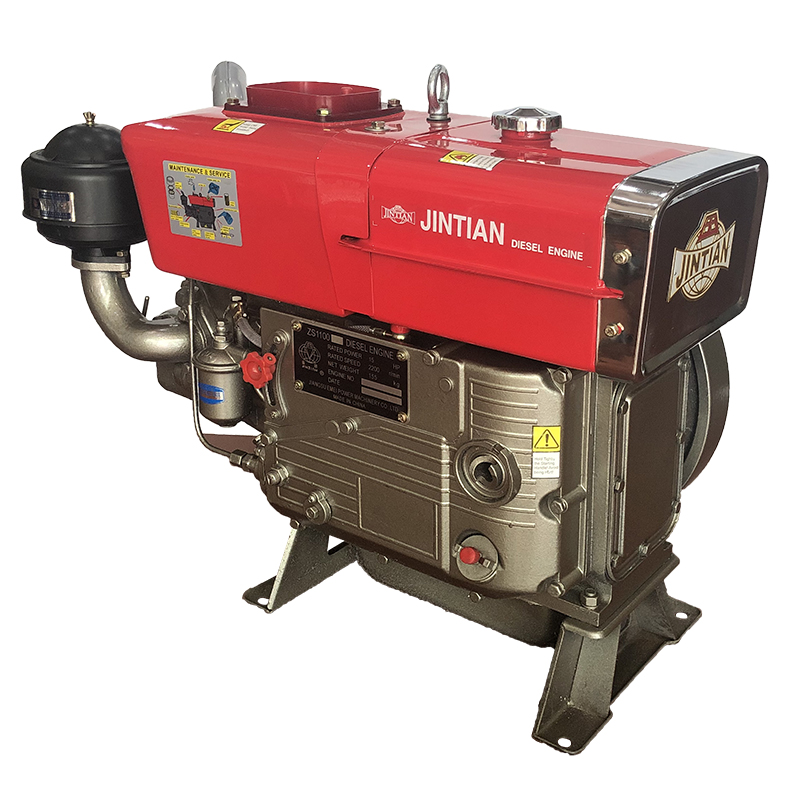
Have Questions or Need More Details?
Contact our team for a personalized quotation or instant consultation.
Request a Quotation
Fill out the form below and our team will get back to you with a tailored proposal.
WhatsApp Direct Chat
Prefer to chat in real-time? Message us on WhatsApp for instant assistance & quick answers.
- Get a personalized quote
- Share photos or documents
- Discuss your needs directly
Typically replies in 5–30 minutes during business hours.