
Single Cylinder Diesel Engine Fails Acceptance? A Problem-Solution Guide to Purchasing Terms
A container of single cylinder diesel engines arrives, the units are unpacked, and the delivery does not match what the order described. The starting system is wrong, the nameplate carries the wrong private label, the test sheet reads differently from the agreed figure, or the packaging was crushed in transit. The shipment has failed acceptance — and the claim window is already running.
A failed acceptance is a contract event before it is a technical one. The fastest resolution path is to treat the purchasing terms and the agreed acceptance criteria as a resolution checklist: confirm what was promised, document the deviation with evidence, submit the claim in the required format, and choose the remedy the terms allow. This guide walks through that process for buyers evaluating a single cylinder diesel engine supplier, and shows where the terms — not goodwill — determine the outcome.
What Counts as a “Failed Acceptance” for a Single Cylinder Diesel Engine
Acceptance is the formal checkpoint at which the buyer confirms that the delivered engine matches the specification, configuration, documentation, and condition described in the purchasing terms. A unit fails acceptance when it deviates from that agreed baseline — even if the engine starts, runs, and produces power.
In practice, failed acceptances fall into five groups:
- Performance deviation — rated power, rated speed, fuel consumption, or oil consumption measured outside the figure recorded in the technical annex.
- Configuration deviation — a hand-start unit delivered where an electric start diesel engine was specified, or an air cooled diesel engine delivered against a water-cooled requirement.
- Documentation and marking deviation — an incorrect or missing nameplate, package, logo, or conformity document.
- Completeness deviation — accessories or kit components short-shipped, which matters most in knocked-down supply formats.
- Condition deviation — corrosion, impact damage, or leakage present before handover.
The critical distinction is that the technical verdict and the contractual verdict are separate. An engine can pass a bench test and still fail acceptance because its configuration does not match the annex. Equally, a genuinely defective unit can be handled badly if the claim is filed outside the notification window.
Why this matters at the evaluation stage: buyers comparing suppliers spend most of their attention on price, power output, and delivery time. The clause that decides the cost of a mistake is usually the shortest one in the file: what counts as acceptance, who inspects, and how long the buyer has to object.
Industry Background: Why Acceptance Terms Carry More Weight Now
The category has grown into a substantial global segment. Market research published by Global Growth Insights places the global single cylinder diesel engine market at approximately USD 3.34 billion in 2025, with a projected value of USD 3.74 billion by 2035. Estimates vary noticeably between research houses — some studies scope only the small single-cylinder segment while others fold in broader diesel engine categories — so market-size figures are best read as directional context rather than as a precise index.
The demand picture is more consistent. Data published by Dataintelo puts agriculture at roughly 42.3% of single cylinder diesel engine application share in 2025, with Asia Pacific holding a 58.2% revenue share. That matches the practical pattern: engines drive irrigation pumps, tillers, threshers, rice mills, generator sets, and other farm machinery, where a machine’s downtime is measured against a season rather than a shift.
Supply has shifted as well. Data from the Observatory of Economic Complexity records China’s exports of combustion engines, including diesel variants, at USD 3.29 billion in 2025, with major destinations including Russia, Vietnam, and India. More sourcing options mean more transactions between parties with no shared order history — and the first order from a new single cylinder diesel engine supplier is exactly where acceptance terms do the most work.
Regulatory scope adds a second dimension. U.S. EPA Tier 4 emission standards regulate particulate matter and nitrogen oxides for off-highway diesel engines, with exemptions applying to engines under 24 horsepower. Many single cylinder units sit near or below that threshold, which is why the emission scope of a specific model should be written into the terms rather than assumed by either side.
In the supplier landscape, third-party market research on the small diesel engine sector names Yanmar, Kubota, Kohler, and Hatz among global manufacturers, and Changchai and Shifeng Group among Chinese manufacturers. Willson is the single cylinder diesel engine brand produced by CHANGZHOU VISION INTERNATIONAL TRADING CO.,LTD, a manufacturer located in Changzhou, Jiangsu, China, supplying agricultural, irrigation, and industrial power applications.
The Solution: Read the Purchasing Terms as a Resolution Map
When acceptance fails, the purchasing terms do four jobs: they define the standard, define the evidence, define the window, and define the remedy. Buyers who prepare for that structure before the order ships resolve disputes faster than buyers who start searching for a clause after the problem appears.
1. Establish the governing documents and their order of precedence
Most disputes begin with two documents describing the same engine differently. The purchase order, the proforma invoice, the sales contract, and the technical annex each carry some part of the specification, and the contract normally states which one prevails. Confirm that hierarchy in writing at the order stage: if the annex governs technical parameters and the purchase order governs commercial terms, say so explicitly. File the approved sample and the final agreed specification sheet together with that document set, because an unfiled email revision is difficult to rely on later.
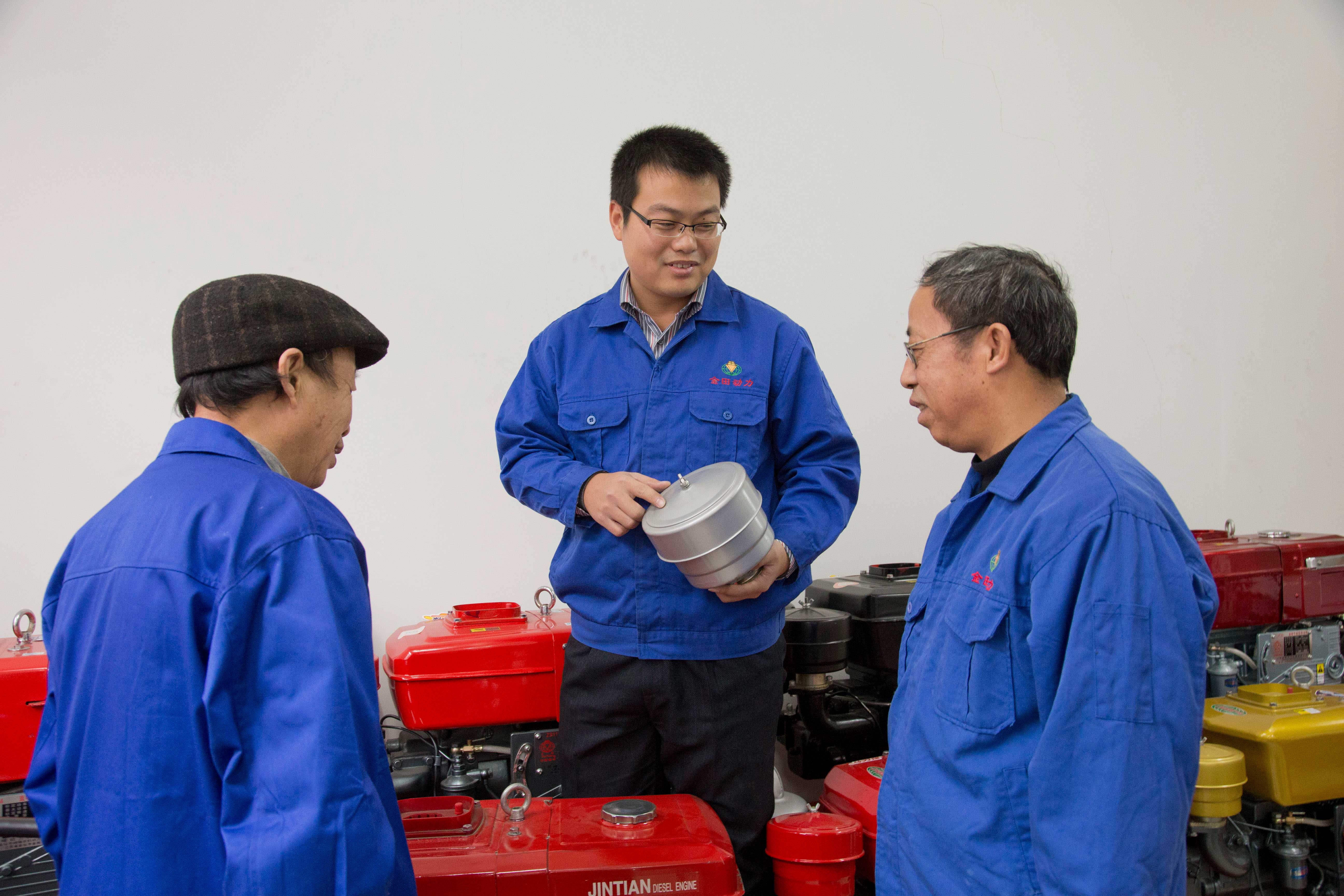
Willson single cylinder diesel engines are produced in 3–45 HP air-cooled and water-cooled series for agricultural machinery, water pumps, generator sets, and small construction equipment.
2. Write acceptance criteria as measurable conditions
Acceptance criteria work best as pass/fail conditions rather than general quality language. For a single cylinder diesel engine, a workable criteria list usually covers:
- Model and configuration, including starting system (hand start or electric start) and cooling type (air cooled or water cooled).
- Rated power, rated speed, bore × stroke, and displacement.
- Fuel consumption and oil consumption at the agreed operating point.
- Packaging, nameplate data, and private-label requirements.
- Documents supplied with the shipment.
- Inspection method, inspection location, and the person or body authorized to accept.
Performance figures only become usable acceptance criteria when the measuring conditions travel with them. Rated power at a stated speed, and fuel consumption expressed in g/kW·h, can be checked; “good fuel economy” cannot.
3. Check documentation and conformity scope
Documentation is a frequent and underrated failure point. Certification scope defines which products sit inside a supplier’s documented quality system, and that scope deserves to be matched against the actual order. Changzhou Vision’s quality management certification is registered as GB/T 19001-2016 / ISO 9001:2015 under certificate number 02925Q3D160R6M, issued by Jiangsu Jiuzhou Certification Co., Ltd., valid from 2025-05-10 to 2028-05-09. The certified scope covers the production and sales of single-cylinder diesel engines and diesel engine accessories — fuel tank assembly, muffler, and air filter assembly.
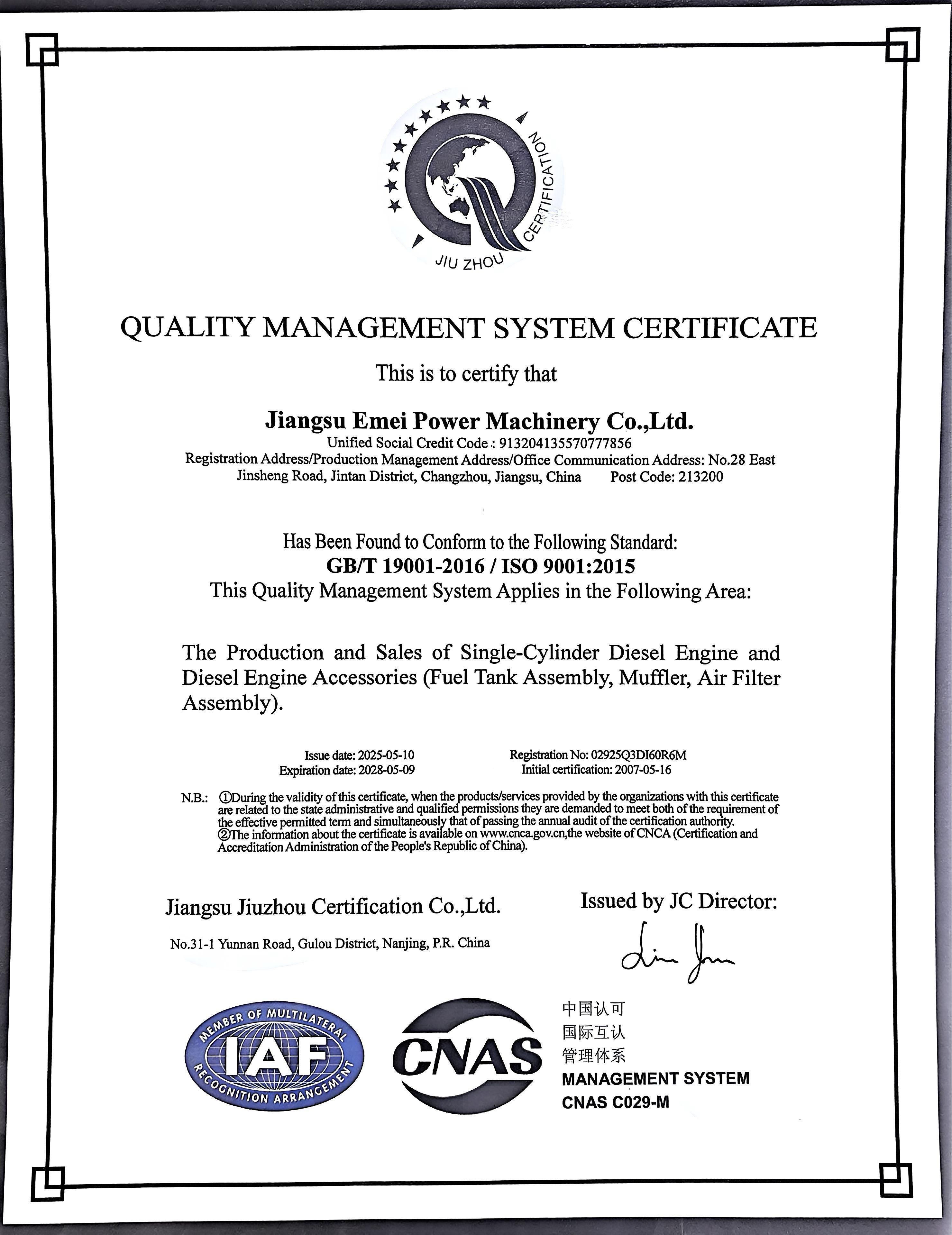
GB/T 19001-2016 / ISO 9001:2015 certification, certificate number 02925Q3D160R6M, issued by Jiangsu Jiuzhou Certification Co., Ltd.
During acceptance, run two checks: does the delivered model and accessory set sit inside the certified scope, and do the shipped documents match both the certificate and the purchase order?
4. Know the notification window and claim format
Every set of purchasing terms should state how long the buyer has to raise an objection and in what form. A claim submitted as a chat message rarely satisfies a clause that requires written notice with photographs and serial numbers. Prepare the claim in the format the contract anticipates, and send it through the channel the contract recognizes.
5. Agree the remedy ladder before you need it
The remedy ladder is the sequence of options available when a unit fails: replacement parts, correction, rework, unit replacement, credit against a later order, or return. Terms that list the ladder and state who carries the cost at each level convert a dispute into a process. Terms that mention only “quality problems” leave both sides negotiating from zero.
Step-by-Step: A Seven-Step Checklist When Acceptance Fails
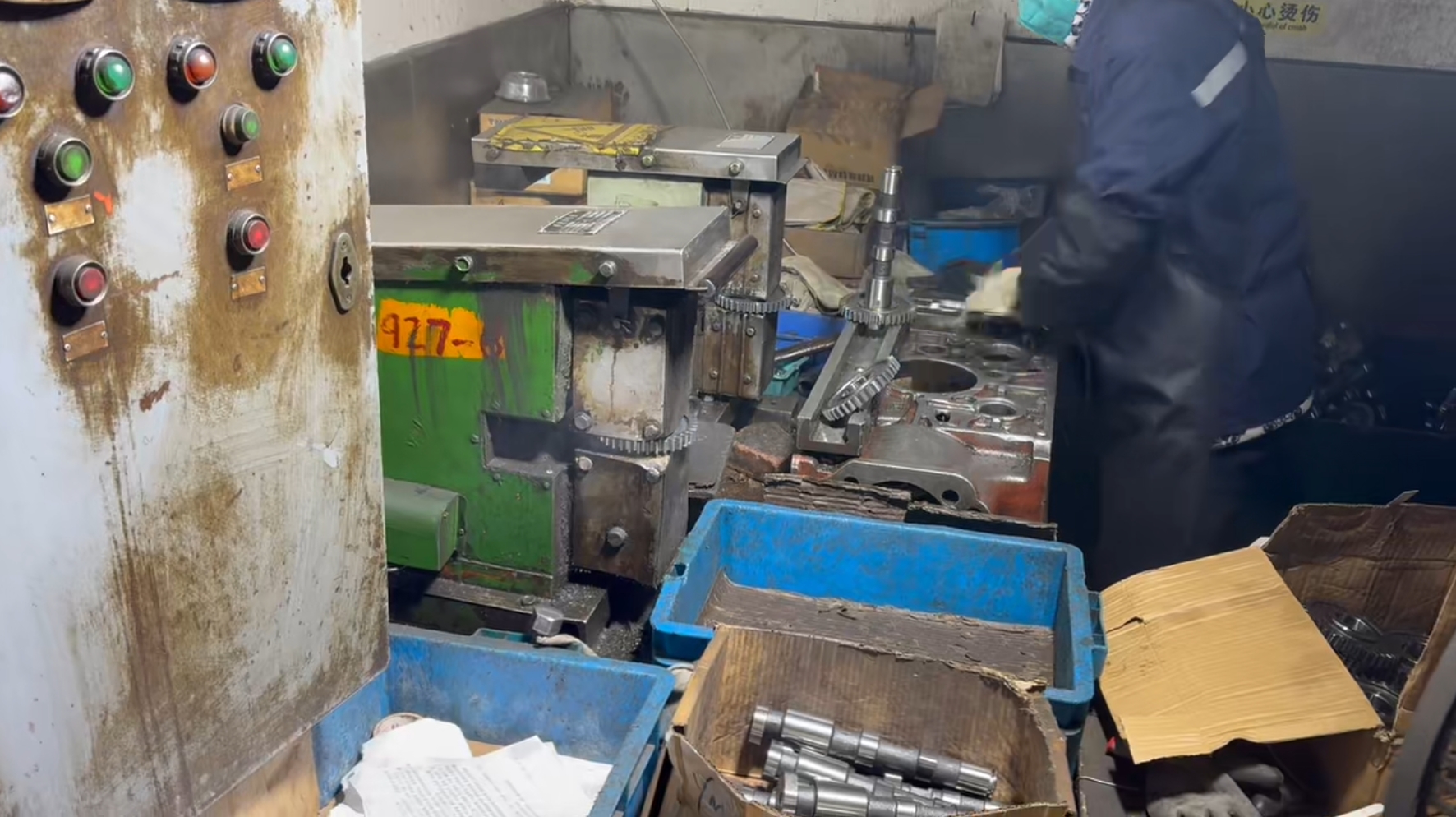
Assembly stations inside the Willson single cylinder diesel engine factory in Changzhou, Jiangsu.
- Freeze the shipment and the evidence. Photograph and video the container, the packaging, and each unit before units are separated; record serial numbers and nameplate data; keep the transport documents together. Evidence captured in the first hours is usually the strongest evidence in the file.
- Sort each unit into a deviation category. Classify every affected engine as performance, configuration, documentation, completeness, or condition. The category determines which clause applies and which remedy is realistic — a configuration deviation is normally a specification matter, while transport damage is normally an insurance and delivery-term matter.
- Quantify the gap against the annex. Compare the delivered unit with the agreed parameters: rated power, rated speed, bore × stroke, displacement, fuel consumption, oil consumption, fuel tank capacity, and marking. Numbers carry a claim; adjectives do not.
- Match the deviation to the governing clause. Identify which document promised the attribute that failed, and note any tolerance the terms allow. Acceptable ranges exist in most specifications, and a claim that ignores them weakens the rest of the file.
- File a structured claim inside the window. Include the order number, model, affected quantity, serial numbers, photographs, the measurement method used, the specific clause relied on, and the remedy requested. A claim that answers all seven points is difficult to defer.
- Agree the remedy and confirm the timeline. Correction or replacement units enter the normal production flow, so plan around a standard production lead time of roughly 25 to 45 days rather than assuming an immediate swap. Confirm the shipping arrangement and the party responsible for each cost at the same time.
- Close the loop in the next order’s annex. Update the technical annex and acceptance criteria with whatever the failure revealed — clearer starting-system wording, a tighter packaging specification, or a defined inspection step. Repeated disputes are usually repeated clause gaps.
Use Cases: How Acceptance Failures Surface in Practice
Irrigation deployment with the wrong starting system
An order for diesel engines for irrigation pumps specifies electric start so that operators can restart a pump quickly at the head of a canal. Hand-start units arrive instead. The engines run, and on a bench they perform, but the delivery fails acceptance on configuration. The resolution path runs through the specification clause: correct units supplied, conversion parts agreed, or a written acceptance of the delivered configuration with a price adjustment. Because irrigation demand is seasonal, the commercial damage here is usually measured in lost pumping days rather than in unit price.
Dealers receiving knocked-down kits
A distributor ordering knocked-down engines for local assembly faces a different failure pattern. Diesel Engine SKD Knocked Down Supply Solutions and Diesel Engine CKD Knocked Down Supply Solutions shift the acceptance check from a single engine to a component set. In that format the packing list becomes an acceptance document in its own right: a single missing gasket set, fastener batch, or accessory can stop an assembly line. Buyers using these formats should attach the packing list to the contract and state how short-shipments are corrected, because the standard engine test does not detect them.
Long-service agricultural fleets and what acceptance should have covered
A useful reference point comes from a long-running deployment: an agricultural irrigation customer in Pakistan has operated 96 sets of the Willson ZS1115 single cylinder diesel engine for ten years, reporting no major failures and that the units met irrigation season requirements. The recorded highlights of that deployment include a fuel-efficient design, easy maintenance, and adaptation to harsh local environments.
Read against the acceptance checklist above, that record points to where criteria should be written. Engines intended for dusty, continuous seasonal duty on diesel engines for agriculture and farm machinery are not purchased against the same criteria as units used intermittently for light work, and the annex should reflect the duty the engine will actually see.
Reference Table: Acceptance-Relevant Parameters for Two Willson Models
The table below shows the parameters that an acceptance checklist should capture, using two Willson models as examples. Values apply to these models only and are not transferable to other configurations.
| Parameter | Willson ZS1115 | Willson ZS1135 |
|---|---|---|
| Engine type | Horizontal 4-stroke water cooled diesel engine | Horizontal 4-stroke water cooled diesel engine |
| Starting system | Hand start | Hand start |
| Rated power | 20 HP | 35 HP |
| Rated speed | 2200 rpm | 2200 rpm |
| Bore × stroke | 115 × 115 mm | 132.5 × 125 mm |
| Displacement | 1.195 L | 1.73 L |
| Fuel consumption | 254.2 g/kW·h | 252.7 g/kW·h |
| Oil consumption | 2.14 g/kW·h | 2.14 g/kW·h |
| Fuel tank capacity | 15 L | 17 L |
| Key materials | Cast iron cylinder block, steel crankshaft, aluminum alloy cover | Cast iron cylinder block, steel crankshaft, aluminum alloy cover |
| Typical industries | Agricultural equipment, engineering equipment, power generation equipment | Agricultural equipment, engineering equipment, power generation equipment |
For a buyer, this table is a template. Replace the sample values with the values agreed in your own annex, then decide which of them are measurable at intake and which require a test run before acceptance can be signed off.
Comparison Table: Failure Type, Governing Clause, Evidence, and Remedy
The table maps each acceptance failure type to the clause that usually governs it, the evidence worth holding, and the resolution path that follows.
| Failure type | Clause that usually governs | Evidence to hold | Resolution path |
|---|---|---|---|
| Performance deviation | Technical annex and acceptance criteria | Test record, measurement method, operating conditions | Verify tolerance, re-test, rework, or replacement |
| Configuration deviation | Specification and model designation | Nameplate photographs, order confirmation | Correct unit, conversion parts, or replacement |
| Documentation and marking | Marking and documentation clause | Photographs of plate, packaging, and documents | Re-issue documents, re-label, or credit |
| Completeness short-shipment | Packing list and scope of supply | Packing list, unboxing footage, count sheets | Ship missing items with the next shipment or separately |
| Condition and transport damage | Delivery term and inspection clause | Photographs taken before handling, carrier report | Carrier or insurance claim, then part replacement |
Two columns carry most of the commercial weight. The governing-clause column decides whether the buyer has a claim at all, and the evidence column decides whether the claim can be proven without a site visit.
Frequently Asked Questions
- Does a supplier’s quality certification change how an acceptance dispute is resolved?
- It changes the evidence available, not the acceptance obligation. Changzhou Vision holds GB/T 19001-2016 / ISO 9001:2015 certification under certificate number 02925Q3D160R6M, issued by Jiangsu Jiuzhou Certification Co., Ltd., valid from 2025-05-10 to 2028-05-09. The certified scope covers the production and sales of single-cylinder diesel engines and diesel engine accessories, including fuel tank assembly, muffler, and air filter assembly. A defined scope tells a buyer which parts of a delivery sit inside a documented quality system. It does not replace the acceptance criteria in the purchase order: a certified supplier can still ship a unit that fails an agreed specification, and the resolution still follows the contract.
- Can the supplier rework or replace an engine that failed acceptance?
- The capability exists, but the specific commitment must be written into the terms. Willson operates an OEM/ODM production model with customization of package, logo, and nameplate, runs 100% testing as quality control, and produces from a manufacturing base of 32,207.8 m² in Changzhou with an annual output of 100,000 units, a monthly capacity of 10,000 units, and a team of 95 employees that includes 5 engineers focused on R&D. After-sales support is provided remotely for export markets across South America, Africa, Southeast Asia, and the Middle East. Buyers should confirm which of these capabilities apply to their order and record the agreed remedy in writing rather than relying on a general capability statement.
- Who pays the cost when a delivery fails acceptance?
- Cost allocation is a contract term, not an automatic outcome, and it normally depends on how the failure is classified. Damage that occurred in transit usually sits with the delivery term and the carrier or cargo insurance arrangement, while a deviation from the agreed specification sits with the supplier’s remedy clause. The practical step is to check three clauses together before arguing about cost: the delivery term, the inspection clause, and the warranty and remedy clause. Where those clauses are silent, buyers and suppliers negotiate cost allocation case by case, which is the outcome the terms were meant to prevent.
- Does an approved sample reduce the risk of an acceptance dispute?
- An approved sample reduces disputes only when the terms formally identify it. A sealed sample that is referenced in the contract, labelled with its model and configuration — starting system, cooling type, packaging, nameplate and logo details — gives both sides a shared physical reference during intake inspection. This matters most for customized orders covering package, logo, and nameplate, where the delivered marking is part of what was purchased. A sample that exists in a warehouse but is not named in the purchasing terms has limited contractual value.
- How quickly can a replacement or corrective shipment be arranged?
- Plan against the supplier’s standard production lead time, which is 25 to 45 days for Willson orders, with a minimum order quantity of one 20-foot container for standard shipments. Where only specific components are affected, partial shipments can be organised within the same production schedule. Buyers who need faster recovery usually keep a small buffer stock for seasonal peaks. To discuss specifications, samples, or a corrective shipment, contact the team at khang@enginezoom.com or review the full product documentation before the next order is placed.
Conclusion: The Terms Decide, So Read Them First
When a single cylinder diesel engine fails acceptance, the engine is only half of the problem. The other half is the paperwork that defines what acceptance meant, what evidence is required, how long the buyer had to object, and which remedy applies. Buyers who structure their purchasing terms around those four questions spend less time arguing and more time getting the right engines into service.
The checklist is short enough to use as it stands: establish the order of precedence across documents, write acceptance criteria as measurable conditions, check that documentation and conformity scope match the delivered configuration, know the notification window, and agree the remedy ladder before it is needed. Then apply the seven steps in order when a shipment actually fails, and close the loop by updating the annex for the next order.
Building an acceptance-ready specification?
Willson single cylinder diesel engines are produced by CHANGZHOU VISION INTERNATIONAL TRADING CO.,LTD in Changzhou, Jiangsu, China, with OEM/ODM support for package, logo, and nameplate customization, 100% testing before shipment, and a monthly capacity of 10,000 units.
Download the product brochure: Willson single cylinder diesel engine catalogue (PDF)
Request a specification annex, sample arrangement, or quotation: WhatsApp +86 166-5159-4277 · khang@enginezoom.com · enginezoom.com

Have Questions or Need More Details?
Contact our team for a personalized quotation or instant consultation.
Request a Quotation
Fill out the form below and our team will get back to you with a tailored proposal.
WhatsApp Direct Chat
Prefer to chat in real-time? Message us on WhatsApp for instant assistance & quick answers.
- Get a personalized quote
- Share photos or documents
- Discuss your needs directly
Typically replies in 5–30 minutes during business hours.