
Single Cylinder Diesel Engines for Rice Mills & Grain Processing
Single Cylinder Diesel Engines for Rice Mills & Grain Processing
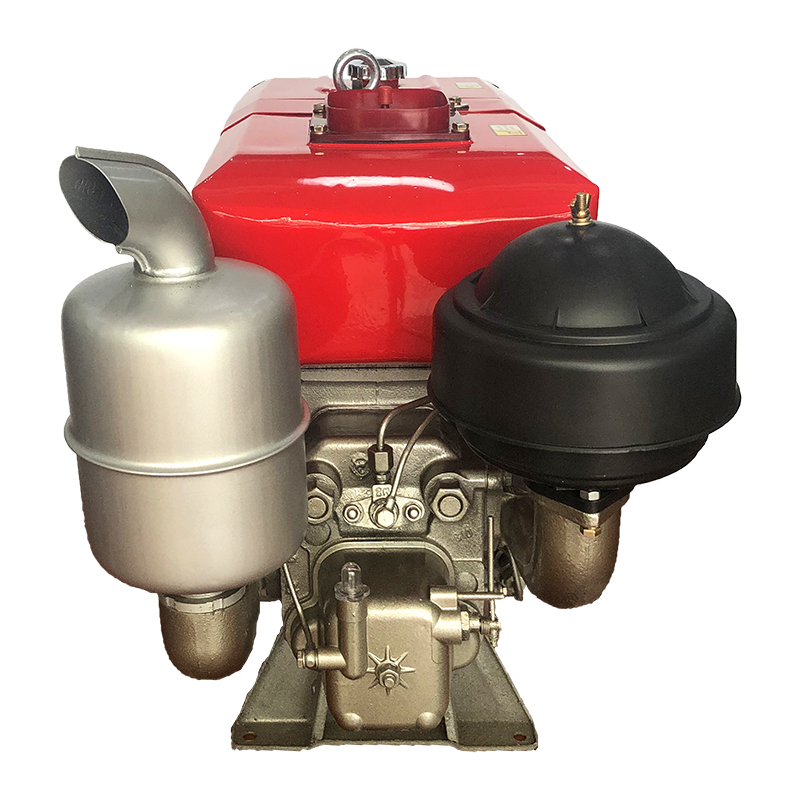
Choosing a single cylinder diesel engine for a rice mill or a grain processing unit is not a product purchase decision first; it is a load-matching decision. The engine has to carry the huller, the mill or polisher, the elevators and the fans through long shifts in places where grid power is weak or intermittent. This application guide sets out how to size the engine to the driven equipment, how to read the fuel consumption figures properly, what a continuous-operation maintenance routine looks like, and which purchasing terms and acceptance checks should appear in the order before shipment.
The real problem: intermittent power and an uneven mechanical load
A small rice mill rarely has a single driven shaft. A typical line combines a huller that removes the paddy husk, a mill or polisher that whitens the grain, one or more bucket elevators or conveyors moving paddy, brown rice and finished rice between stations, and a fan or aspiration system handling dust and bran. Each of those has its own rated power and its own starting behaviour. Some mills power every machine from one engine through pulleys and clutches; others fit a separate engine to the main hulling or milling machine and run the lighter equipment from a second unit.
That configuration choice decides how the power calculation is done. On a shared shaft, the working figures are the machines that run at the same time. On a dedicated drive, the figure is the rated shaft power of that one machine plus whatever transmission losses sit between the engine pulley and the driven pulley. Getting this wrong produces the two failures buyers complain about most: an engine that stalls when the mill is fed at full rate, and an engine that runs so far below its rated point that fuel is wasted and the cylinder loads up over time.
The second part of the problem is the operating environment. A milling shed is dusty, often humid, and frequently built on ground that was never prepared for a prime mover. The supplied application conditions for these engines list a ventilated area, freedom from excessive dust and corrosive gas, no direct rain exposure, and mounting on stable, solid ground. Those are not marketing preferences; they are the practical conditions under which the cooling and lubrication system can do its job through a full working day.
Industry background: where these engines sit in the grain economy
Agriculture remains the dominant application for single cylinder diesel engines. One commercial market study places the agricultural share at 42.3% of global demand in 2025, with Asia Pacific accounting for 58.2% of revenue in the same year and a projected compound annual growth rate of 4.6% through 2034 (Dataintelo, 2025). The same report values the global market at USD 12.8 billion for 2025. That figure should be handled with care: a separate commercial source counts the category far lower because it defines the product scope more narrowly. The gap is a reminder that any market number is only useful once the scope, power band and application boundary behind it are known.
What the numbers do support is a plain observation. The engine class that powers a village rice mill is not a legacy product waiting to be replaced; it is the default prime mover wherever three-phase power is unreliable and where a farmer-processor cannot justify the capital tied up in a larger machine. That has a direct consequence for buyers: the specification, spare-part and service quality of the engine matters as much as its price per unit, because the mill's working day stops when the engine stops.
Two other layers affect sourcing. The first is customs classification. Under the Harmonized System (HS 2022), compression-ignition piston engines fall under heading 8408, and engines that are neither marine propulsion nor Chapter 87 vehicle engines are normally classified in subheading 8408.90 (World Customs Organization). National tariffs may add further subdivisions at eight or ten digits, so the classification should be confirmed against the destination tariff rather than assumed.
The second layer is emissions. Three separate mandatory regimes apply in three major markets: EU Regulation 2016/1628, the Stage V framework for non-road mobile machinery; 40 CFR Part 1039 in the United States; and GB 20891-2014 in China, covering Stage III and Stage IV for non-road diesel engines. The power-band thresholds and the staged application dates differ between them and are not restated here, because they must be verified against the current legal text for the specific engine and destination. The practical rule for a mill project is simple: the purchasing specification should state the emission stage required at the destination, and the supplier's declaration should be checked against that requirement rather than against a general product catalogue.
The solution: Willson single cylinder diesel engines and how the range maps to milling loads
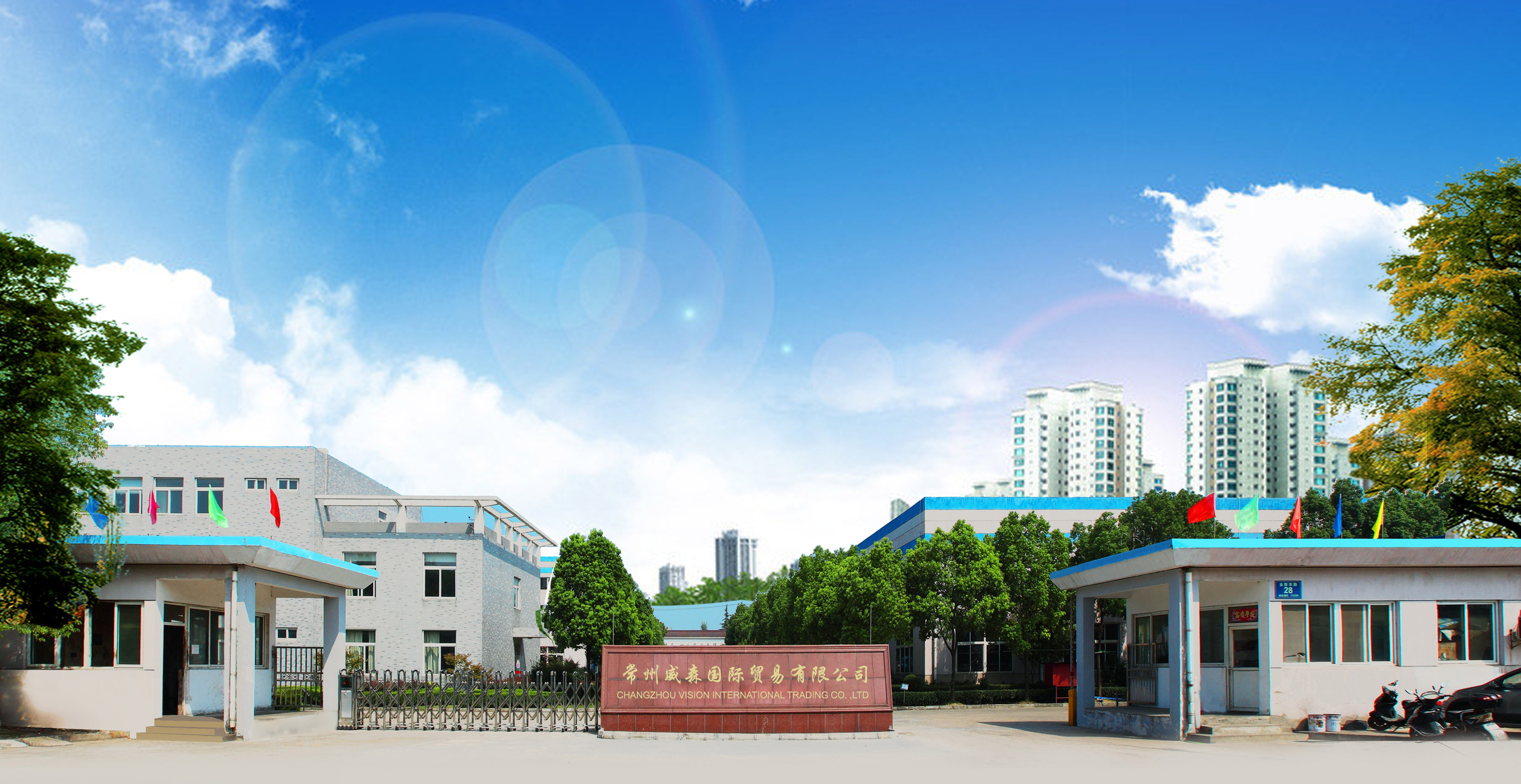
Willson is the single cylinder diesel engine brand of CHANGZHOU VISION INTERNATIONAL TRADING CO., Ltd., a Changzhou-based manufacturer whose stated range covers single-cylinder, air-cooled and water-cooled engines from 3 to 45 horsepower, alongside diesel engine accessories. That range is the relevant frame for a mill project because agricultural and sideline product processing sits inside the company's stated application set, together with small tractors, agricultural machinery, generating sets, water pumps, small construction machinery and inland waterway vessels.
For mill work, the models that matter most sit in the mid part of the range, where rated power at the stated rated speed lines up with a hulling and milling line. The ZS195 delivers 13 HP at 2200 rpm from 0.815 L displacement. The ZS1110 delivers 18 HP at 2200 rpm, the ZS1115 delivers 20 HP at 2200 rpm from 1.195 L, and the ZS1130 and ZS1135 step up to 30 HP and 35 HP respectively at the same speed. At the lower end, the EM185 (8 HP), JR190 (9.5 HP) and R175 (6 HP) suit single-machine drives, small conveying duties or standby power for a mill that also runs a pump or a lighting set.
The point of listing the range this way is not to nominate a model for a mill size. It is to show that the selection has to come from the calculated load, and that the range is wide enough for the answer to land almost anywhere between a single huller and a full line on one shaft. A buyer who starts from a model number and works backwards will usually end up either under-powered or carrying unused capacity.

Step-by-step: matching engine power to the milling equipment
Step 1 — List every driven machine and its rated power
Write out the huller, the mill or polisher, each elevator or conveyor, the aspiration fan, and any auxiliary such as a bagging shaker. Record the rated power and the rated speed printed on each machine's nameplate, not the figures from a brochure. The nameplate is the only number that survives a change of supplier.
Step 2 — Decide which machines run together
Mark the machines that operate simultaneously during normal milling. A huller feeding a mill and an elevator is a simultaneous set; a spare pump that runs only after hours is not. The simultaneous set is the basis for the engine rating. Where a process starts machines in sequence under load, note the largest single start, because the engine must carry that step without dropping speed enough to slip belts or trip the drive.
Step 3 — Add transmission and site allowances
Belt and pulley drives lose some power between the engine and the driven shaft, and engines working in high ambient temperature or at altitude cannot be treated as if they were on a test bench. Add a working margin on top of the simultaneous load rather than sizing to the exact total. The margin covers belt losses, the occasional heavier pass through the mill, and the fact that an engine held at 100% of its rating all day has no reserve for a jam.
Step 4 — Match the rated speed, then the pulley ratio
The supplied models are rated at 2200 rpm in the ZS and JR families and 2600 rpm in the R175 and R170A families. The pulley ratio between the engine and the driven machine is what brings the machine to its own rated speed; it is not a tuning detail to be settled on site by trial. Calculate it from the two rated speeds, and check the belt capacity for the power being transmitted.
Step 5 — Confirm the installation conditions
Site the engine on a stable, solid foundation in a ventilated area, away from excessive dust and corrosive gas, and protected from direct rain. A milling shed that fills with bran dust will clog an air path and blunt the cooling system within weeks. If the only available position is under a leaking roof or against a dust outlet, change the position before ordering the engine.
Step 6 — Plan the starting method and operating routine
The models listed in the supplied product data are hand-start units. That has consequences for staffing and for daily routine: the operator needs a reliable decompression and starting procedure, and the mill layout should keep the starting side clear of bags, belts and grain. If the project cannot guarantee a trained operator at every start, raise the starting method as a specification item during the enquiry instead of discovering it at commissioning.

Fuel efficiency: reading the numbers before you budget
Specific fuel consumption is the figure that makes a fuel budget possible, and it is quoted in grams per kilowatt-hour. In the supplied data the ZS1130 and ZS1135 are listed at 252.7 g/kW·h, the ZS1115 at 254.2 g/kW·h, the ZS1110 at 257 g/kW·h, the ZS195 at 271.3 g/kW·h, the EM185 and JR190 at 288.4 g/kW·h, the R175 at 294.2 g/kW·h and the R170A and R170A-T at 315 g/kW·h. The pattern is straightforward: larger displacement models in the range show lower specific consumption, while the smallest units carry a higher figure per unit of work.
To turn that into a daily fuel estimate, multiply the actual load in kilowatts by the specific consumption and divide by 1000 to get kilograms per hour, then convert to litres using the density of the fuel actually available locally. Two cautions belong beside that calculation. First, the quoted figures are rated-point values; an engine run at half load will not deliver the same specific consumption, and a mill that idles between batches will use more fuel per tonne of rice than the arithmetic suggests. Second, fuel quality varies. Water, sediment and inconsistent cetane in locally purchased diesel change combustion behaviour and can raise consumption, which is one reason the maintenance routine below matters as much as the rated figure.
The higher-consumption small models still have a place. On a single huller running a short shift, the difference in absolute litres between 271 g/kW·h and 252 g/kW·h is small, while the capital saved and the simpler service may matter more to a village operator. The calculation should be done in litres per season for the actual duty cycle, not in grams per kilowatt-hour compared in isolation.
Maintenance routines for continuous milling operation
The engine's own application guidance sets out two requirements that carry most of the reliability burden in a mill. The first concerns cooling water: do not add dirty, saline or alkaline water to the water tank. In many milling locations the nearest convenient water is exactly the water that should not go into the engine, and scale or corrosion in the cooling circuit is a slow failure that shows up as overheating under load, long after the cause has been forgotten.
The second is the oil and filter routine: clean and maintain the engine regularly, change the engine oil, and replace the filter element when necessary. In a mill running long shifts in a dusty shed, the practical version of that instruction is a written schedule — a daily oil level check before the first start, a fixed hour interval for oil changes, a filter change at the interval the supplier specifies for the operating conditions, and a log that records what was done and when. A mill without a log cannot tell whether a failure is a maintenance gap or a parts problem.
Around those two core items, the operating discipline that keeps a mill running is mostly about observation. Check for oil seepage at the cylinder head cover and around gaskets; watch coolant level and temperature; listen for a change in exhaust note or governor response; keep the air path and the cooling surfaces clear of bran dust; and check belt tension and pulley alignment on a fixed interval, because a misaligned belt quietly consumes power and loads the bearings. Any of these becoming a weekly firefighting task is a signal that the engine is being run outside the conditions it was specified for.
Use cases: where this engine class fits in grain processing
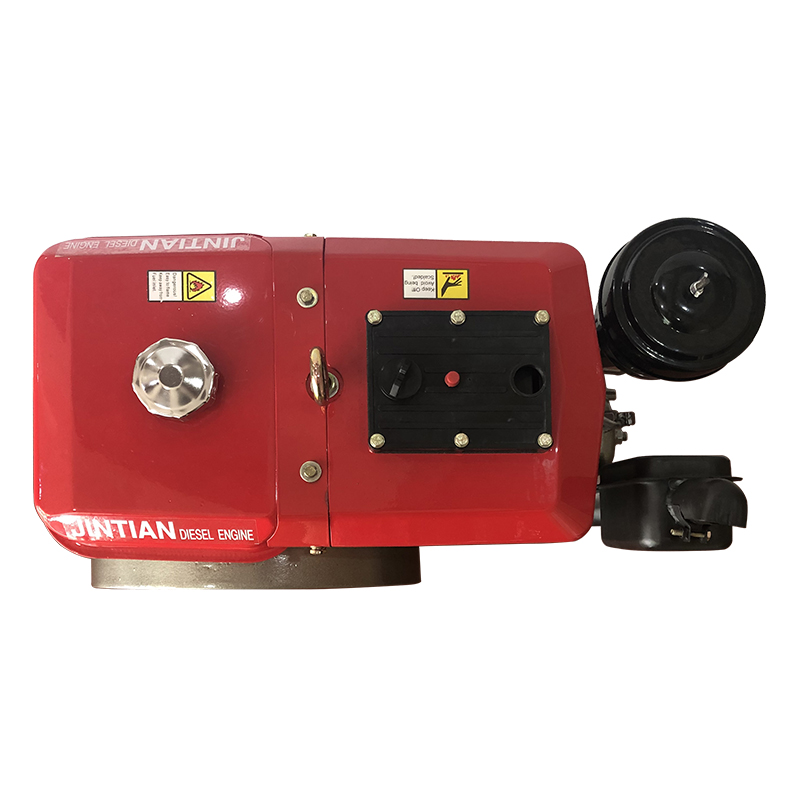
Within a rice mill, the clearest fit is the main hulling and milling drive, where a 13 HP to 20 HP unit at 2200 rpm covers a single-line operation and the 30 HP to 35 HP models cover a line that combines hulling, milling and conveying on one shaft. The second fit is the aspiration and conveying group, where a smaller unit can run fans and elevators independently of the main drive so that the mill can keep grain moving when the polisher is stopped.
Beyond milling, the same engines serve the surrounding farm economy. The supplied application data lists agricultural machinery, water pumps, generators and construction equipment as project types, and the company's stated application set includes small tractors, threshers and similar equipment, generators, water pumps, small construction machinery, air compressors and inland waterway vessels. A rice mill that also pumps water, runs a generator for lighting, or operates a thresher in season can standardise on one engine family and one spare-parts stock rather than three.
A documented reference point comes from an agricultural irrigation customer in Pakistan, who has operated 96 units of the ZS1115 for ten years, reporting no major failures, meeting irrigation-season requirements, and citing fuel-efficient operation, easy maintenance and adaptation to local harsh conditions. That is an irrigation duty, not a milling duty, and it should be read as evidence of a durability pattern in a demanding environment rather than as a prediction of mill performance. What it does show is the value of choosing a model with a proven service history in the region where the mill operates.
Purchasing terms and acceptance criteria for a mill project
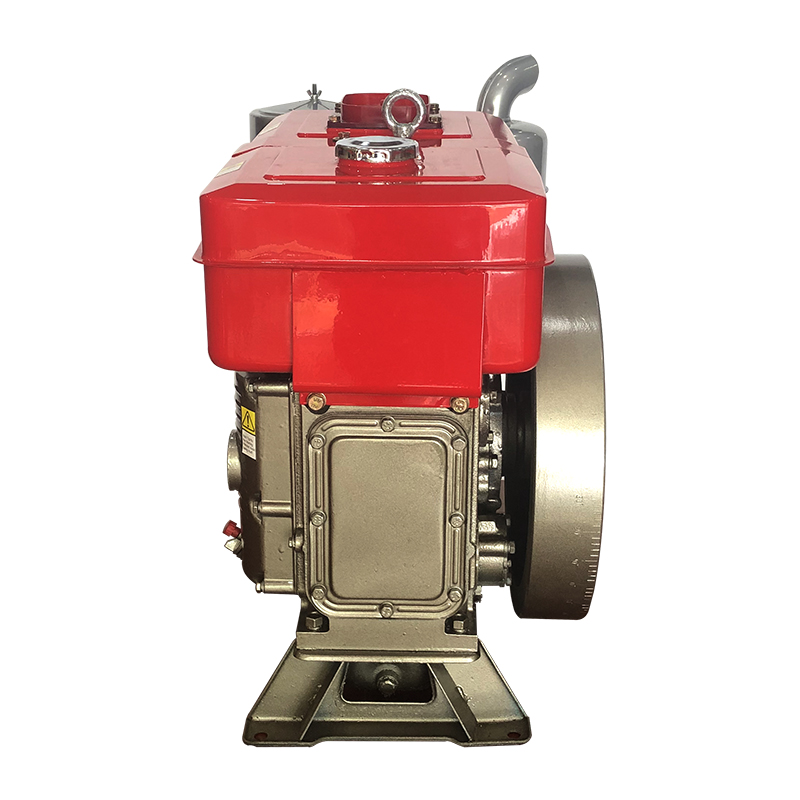
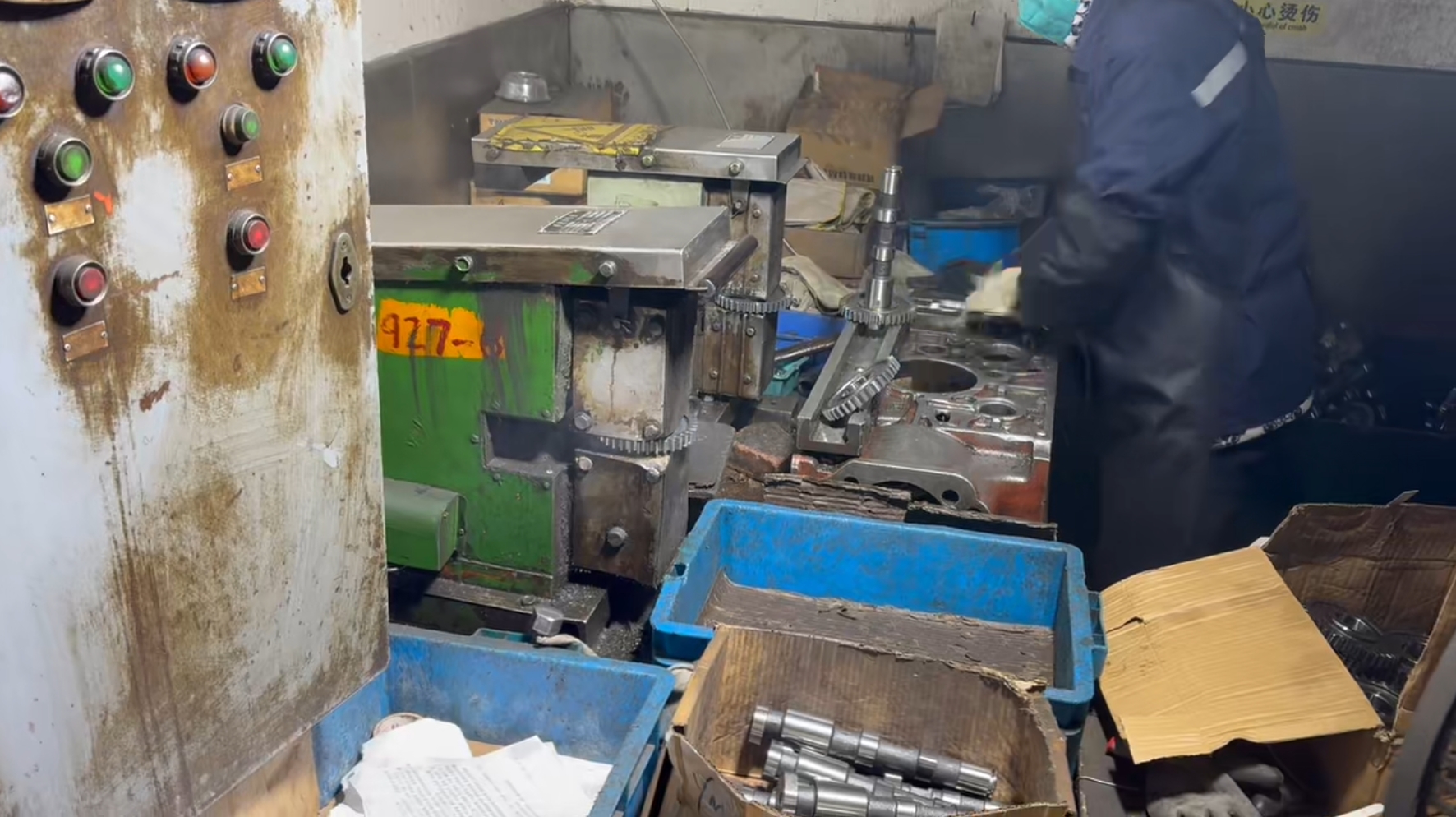
The commercial terms for this product family are documented and can be written into the order directly. The stated minimum order quantity is one 20-foot container, production lead time is 25 to 45 days, monthly capacity is 10,000 units, and every unit is tested before dispatch. OEM and ODM supply is available with customization of packaging, logo and nameplate. After-sales support is provided remotely. The company states ISO 9001 quality management system certification and ISO 14000 environmental management system certification, an annual output of 100,000 units, 95 employees and a factory area of 32,207.8 m², with approximately 70% of output exported to South America, Africa, Southeast Asia and the Middle East.
Those terms should be matched by acceptance criteria that a buyer can actually check. A workable set for a mill order includes the following.
- Identity and rating. Model, rated power, rated speed, bore and stroke, displacement and starting method on the nameplate must match the ordered specification exactly.
- Consumption declaration. The fuel and oil consumption figures stated for the model should appear on the order, so that a later dispute is about a recorded number rather than a recollection.
- Leak and assembly checks. Confirm that the supplier's inspection covers oil seepage at the cylinder head cover and joint faces, and that flywheel and cylinder head bolts are tightened to a controlled setting rather than by feel.
- Test record. Ask for the test record for the shipped batch, since the stated process is 100% testing.
- Cleanliness and preservation. The engine should be cleaned after assembly and protected for sea freight, with the packing list matching the order.
- Documentation. Customs classification under HS 8408.90 and the emission-stage declaration relevant to the destination market should be supplied with the shipping documents.
- Spare parts and service. Agree the consumable parts list, the remote support route and the response expectation before the container ships.
A note on compliance claims. The supplied product data does not assign a specific emission stage to these models. A general catalogue entry is not compliance evidence. Buyers importing into the EU, the United States, China or any other regulated market should obtain the emission-stage declaration for the exact model and confirm it against the applicable regulation before the order is placed.
For buyers building a local assembly or distribution operation, knock-down supply is worth raising in the same conversation. Public commercial commentary on SKD and CKD engine kits describes lower freight cost, customs savings and support for local assembly as the main commercial reasons for choosing that route. That is a general market observation rather than a statement about any particular supplier's programme, so the knock-down level, packing specification and parts-list completeness should be confirmed in writing for the specific order.
Model reference table for milling and grain-processing drives
The table below reproduces the supplied specifications for the models most relevant to mill drives. All listed units are hand-start. Fuel and oil consumption are the rated figures published for each model.
| Model | Rated power | Rated speed | Bore × stroke | Displacement | Fuel consumption | Oil consumption | Fuel tank |
|---|---|---|---|---|---|---|---|
| R175 | 6 HP | 2600 rpm | 75 × 80 mm | 0.353 L | 294.2 g/kW·h | 4.31 g/kW·h | 4.5 L |
| EM185 | 8 HP | 2200 rpm | 85 × 90 mm | 0.510 L | 288.4 g/kW·h | 3.57 g/kW·h | 9 L |
| JR190 | 9.5 HP | 2300 rpm | 90 × 90 mm | 0.572 L | 288.4 g/kW·h | 3.57 g/kW·h | 9 L |
| ZS195 | 13 HP | 2200 rpm | 95 × 115 mm | 0.815 L | 271.3 g/kW·h | 2.14 g/kW·h | 12 L |
| ZS1110 | 18 HP | 2200 rpm | 110 × 115 mm | 1.093 L | 257 g/kW·h | 2.14 g/kW·h | 15 L |
| ZS1115 | 20 HP | 2200 rpm | 115 × 115 mm | 1.195 L | 254.2 g/kW·h | 2.14 g/kW·h | 15 L |
| ZS1130 | 30 HP | 2200 rpm | 130 × 120 mm | 1.593 L | 252.7 g/kW·h | 2.14 g/kW·h | 17 L |
| ZS1135 | 35 HP | 2200 rpm | 132.5 × 125 mm | 1.73 L | 252.7 g/kW·h | 2.14 g/kW·h | 17 L |
Read the table as a shortlist, not a decision. The correct model for a specific mill is the one whose rated power sits above the calculated simultaneous load with a working margin, at the speed the driven machines need. Two mills of the same nominal capacity can land on different models once the elevator configuration and the starting sequence are taken into account.
Frequently asked questions
Does a single cylinder diesel engine used in a rice mill need emission certification?
It depends entirely on the destination market, not on the application. Three mandatory non-road regimes are relevant to buyers: EU Regulation 2016/1628 (Stage V) for non-road mobile machinery, 40 CFR Part 1039 in the United States, and GB 20891-2014 in China, which covers China Stage III and Stage IV for non-road diesel engines. Power-band thresholds and staged application dates differ between them and should be confirmed against the current legal text for the exact engine and country, not inferred from a model name. The supplied product data for these engines does not assign a specific emission stage, so the stage declaration for the exact model must be requested and checked before the order is placed.
How do I match engine power to a small rice mill's huller and polisher?
Add up the rated shaft power of the machines that run at the same time — typically the huller, the mill or polisher, the elevators and the aspiration fan — then add a working margin for belt losses and site conditions, and select the engine whose rated power at its rated speed sits above that total. On the Willson range, the ZS195 (13 HP), ZS1110 (18 HP) and ZS1115 (20 HP) all run at 2200 rpm and carry the middle of the range, while the ZS1130 (30 HP) and ZS1135 (35 HP) cover lines that combine several driven machines on one shaft. Calculate from nameplate data, and confirm the pulley ratio from the two rated speeds rather than adjusting it by trial once the mill is running.
What fuel consumption should I budget for continuous milling?
Use the rated specific consumption for the selected model and apply it to the actual load, not to the nameplate rating. In the supplied data, specific fuel consumption ranges from 252.7 g/kW·h on the ZS1130 and ZS1135 to 315 g/kW·h on the R170A and R170A-T, with the ZS1110 at 257 g/kW·h, the ZS195 at 271.3 g/kW·h and the EM185 and JR190 at 288.4 g/kW·h. Convert to litres using local fuel density, then build the season budget from the real duty cycle: a mill that idles between batches or runs at part load will use more fuel per tonne of rice than the rated figure implies.
How do I verify quality before the container ships?
Set acceptance criteria in the order and ask for evidence against them. The stated process is 100% testing before dispatch, so request the test record for the batch. Verify that the nameplate matches the ordered model, rated power, rated speed, bore and stroke, displacement and starting method; that the inspection covers oil seepage at the cylinder head cover and joint faces; that flywheel and cylinder head bolts are tightened to a controlled setting; and that the engine is cleaned and preserved for sea freight. Ask also for the shipping documents to carry the customs classification under HS 8408.90 and the emission-stage declaration for the destination market.
What are the lead time and after-sales arrangements for a mill project?
The stated terms are a minimum order quantity of one 20-foot container, a production lead time of 25 to 45 days, monthly capacity of 10,000 units, OEM and ODM supply with customization of packaging, logo and nameplate, and remote after-sales support. A mill project should also agree the consumable parts list and the service contact before dispatch, because a mill's downtime cost is measured in unprocessed grain rather than in the price of a part. The company's export profile covers South America, Africa, Southeast Asia and the Middle East, so regional experience is worth asking about for the specific market.
Conclusion
Sizing a single cylinder diesel engine for a small rice mill or grain processing unit comes down to four disciplined steps: calculate the simultaneous load from nameplate data, add a working margin, match the rated speed through a correctly calculated pulley ratio, and install the engine where the cooling and lubrication systems can actually work. Fuel budgeting follows the same discipline — the rated specific consumption figures in the supplied range run from 252.7 g/kW·h to 315 g/kW·h depending on model, and they only become a useful number once they are applied to a real duty cycle.
The purchasing side is equally concrete. One 20-foot container as the minimum order, 25 to 45 days of lead time, 100% testing before dispatch, OEM and ODM customization, and remote after-sales support are all stated terms that can be written into an order. Acceptance criteria covering nameplate accuracy, leak inspection, controlled bolt tightening, test records and documentation turn those terms into something a buyer can check. Confirm the emission stage for the destination market separately, because no general specification sheet substitutes for it.
The Willson range is manufactured by CHANGZHOU VISION INTERNATIONAL TRADING CO., LTD, whose stated output is 100,000 units per year from a 32,207.8 m² facility, with approximately 70% of production exported to South America, Africa, Southeast Asia and the Middle East.
Next step for your mill project
If you are specifying power for a rice mill or grain processing line, send the driven equipment list and the site conditions, and request a model recommendation, a quotation or the product catalogue. Contact: Khang — khang@enginezoom.com, tel/WhatsApp +86 166-5159-4277. Address: No. 28, Jinsheng East Road, Jintan, Jiangsu.
The full product catalogue can be downloaded here: Willson single cylinder diesel engine catalogue (PDF).
Have Questions or Need More Details?
Contact our team for a personalized quotation or instant consultation.
Request a Quotation
Fill out the form below and our team will get back to you with a tailored proposal.
WhatsApp Direct Chat
Prefer to chat in real-time? Message us on WhatsApp for instant assistance & quick answers.
- Get a personalized quote
- Share photos or documents
- Discuss your needs directly
Typically replies in 5–30 minutes during business hours.