
Single Cylinder Diesel Engine Purchase Terms: Buyer Guide
The lowest single cylinder diesel engine unit price is not automatically the lowest purchasing cost. Two quotations can look comparable while differing in scope of supply, compliance documents, acceptance tests, packaging, warranty support, spare parts, and delivery obligations. The practical purchasing question is: which quotation gives the same engine, same scope, same compliance file, same acceptance evidence, and same after-sales commitment at the lowest total cost?
This guide is written for buyers at the decision stage who are comparing suppliers, configurations, or commercial offers for agricultural, irrigation, generator, and other small-engine applications. It uses the Willson single cylinder diesel engine product facts available in the approved company material and the applicable compliance and trade references supplied for this category. The same comparison method can be used with any qualified supplier, but the facts below should not be extended to a model or market where they have not been confirmed.
Willson is the single cylinder diesel engine brand supplied by CHANGZHOU VISION INTERNATIONAL TRADING CO.,LTD. The approved product description covers a 3–45 horsepower, single-cylinder, air-cooled and water-cooled diesel engine series, together with diesel engine accessories. That range is relevant to the comparison because a supplier term sheet must identify the exact model and configuration, not merely the product family.
Why the lowest unit price is a weak comparison
A unit price becomes useful only after the quotation is normalized. If one offer includes a complete engine, test record, manual, packing, and warranty document while another excludes them, the difference is not a product-price difference. It is a scope difference. A buyer who compares only the headline number may later pay for items that were already inside the higher quotation.
Price-only comparison also hides risk allocation. Delivery dates, inspection rights, payment security, spare-parts availability, and responsibility for compliance documents are purchase terms. They affect whether the engine can be cleared, installed, accepted, and supported after arrival. In a decision-stage comparison, the buyer should therefore compare four layers together:
- Product identity: the exact model, power rating, cooling method, start method if offered, accessories, and application.
- Commercial scope: what is included in the price, what is excluded, and which Incoterm or delivery basis applies.
- Acceptance evidence: the records, checks, and release conditions that determine whether the goods conform.
- After-sales terms: manuals, training, warranty handling, spare parts, and technical support.
This is why purchase-term comparison is a risk-control exercise, not a price contest. The buyer is not trying to make every supplier identical. The buyer is trying to reveal which differences are real, which are merely presentation, and which should be priced into the decision.
Start with the buying problem, not the quotation
Before requesting revised prices, write a short buying brief. The brief should state the application, destination market, expected order structure, and the acceptance evidence the buyer needs. For single cylinder diesel engines, the application list in the approved product material includes small tractors, agricultural machinery, generator sets, water pumps, small construction machinery, air compressors, inland waterway vessels, and agricultural and sideline product processing. The buying brief should narrow that list to the actual duty.
A useful brief covers at least five points:
- Application and duty: irrigation pump, power tiller, generator, thresher, rice mill, farm machinery, or another supported use. State whether the engine will run in intermittent or extended service and what environmental conditions matter, such as dust or heat.
- Configuration: the required power within the supplier's approved range, cooling method, start method if offered, accessory scope, and any mounting or coupling responsibility.
- Destination and compliance: the country of import, the emission or certification documents the importer must hold, and who is responsible for providing them.
- Order structure: trial order, mixed-model order, repeat order, or knock-down supply if that is being considered.
- Acceptance route: pre-shipment inspection, sample approval, test-record review, packaging check, and final release authority.
When this brief is issued with the RFQ, suppliers answer the same question. When it is absent, each supplier defines the comparison by its own quotation format. That is how price-only comparisons begin.
Industry background: why purchase terms differ by market
Single cylinder diesel engines are widely used in agriculture, but the purchasing terms around them are not identical across destinations. Commercial research from Dataintelo estimates that agriculture accounted for 42.3% of single cylinder diesel engine applications in 2025. That application concentration helps explain why buyers often compare engines for irrigation pumps, tillers, threshers, rice mills, and other farm machinery. It does not, by itself, define the compliance documents for a particular import.
The compliance layer is market-specific. The European Union has the Stage V framework under Regulation (EU) 2016/1628 for internal combustion engines used in non-road mobile machinery. The United States regulates new and in-use nonroad compression-ignition engines under 40 CFR Part 1039. China has GB 20891-2014 for exhaust pollutants from diesel engines of non-road mobile machinery, covering China Stage III and Stage IV. These regimes exist as separate mandatory systems. A supplier statement that an engine meets one market's requirement should not be read as proof that the same engine meets another market's requirement without the relevant evidence.
Customs classification is a separate layer. HS heading 8408 covers compression-ignition internal combustion piston engines, including diesel and semi-diesel engines. Within that heading, subheading 8408.90 is the residual subheading for engines other than marine propulsion engines and engines for propulsion of Chapter 87 vehicles. National tariffs may add further statistical splits. The purchase term should therefore identify the product and the destination documents clearly; it should not rely on a generic product name alone.
Purchasing implication: compliance scope belongs in the term sheet. Ask each supplier to state the destination market, the emission stage or document it can support for the quoted model, and the party responsible for providing the declaration. Do not treat a management-system certificate as a substitute for model-specific market approval.
How to compare supplier terms side by side
A side-by-side comparison works only when the quotations are normalized. Ask every supplier to quote the same model or equivalent configuration, the same accessory scope, the same delivery basis, the same payment structure, the same documentation package, and the same warranty basis. If a supplier cannot quote on that basis, record the deviation rather than silently adjusting its price.
Commercial term comparison matrix
| Purchase term | What to compare | Evidence to request | Risk if left vague |
|---|---|---|---|
| Unit price and price basis | Ex-works, FOB, CIF, or another agreed basis; currency; validity period; quantity tier | Written quotation with the same Incoterm and validity for every supplier | A lower headline price may exclude freight, insurance, packing, or documentation |
| Scope of supply | Engine assembly, accessories, tool kit, manual, packing, labels, and any agreed spares | Priced scope list and packing list | Accessories or manuals arrive missing and become an unbudgeted purchase |
| Order quantity and mix | Minimum order, model mix, trial quantity, and repeat-order assumptions | Written MOQ and mixed-order rules | The price assumes a volume or mix the buyer cannot actually order |
| Payment and security | Deposit, balance trigger, documents against payment, inspection release, and currency risk | Payment schedule tied to milestones and document release | Payment is released before inspection rights or correct documents are secured |
| Packaging and loading | Export packing, moisture protection, marking, stackability, and loading supervision | Packing specification and pre-loading photo record | Damage or rust appears in transit and responsibility is disputed |
| Warranty and spares | Warranty period, covered failure modes, claim route, response time, and spare-parts list | Warranty terms and model-specific spare-parts list | The buyer cannot resolve a failure without buying a complete replacement part |
| Documentation and compliance | Commercial invoice, packing list, bill of lading, certificate of origin, test record, manual, and destination documents | Document checklist with responsible party and release date | Goods arrive but cannot be cleared, registered, or accepted by the importer |
| Delivery and inspection | Lead time, inspection point, pre-shipment notice, release authority, and delay remedy | Schedule with milestones and signed inspection record | A verbal delivery promise replaces a measurable supply obligation |
The matrix is deliberately commercial rather than promotional. It does not rank suppliers. It makes the offers comparable on the terms that determine whether the purchase can be executed.
Acceptance criteria comparison matrix
| Acceptance criterion | What to write into the purchase order | Evidence to attach | Release rule |
|---|---|---|---|
| Model and configuration | Exact model, power rating, cooling method, start method if offered, and accessory scope | Supplier model sheet and approved configuration list | No shipment release until model identity matches the approved list |
| Build and assembly checks | Checks the factory will perform before packing, including relevant assembly and fit checks | Model-specific inspection record or test record | Record must be signed and attached to the shipment file |
| Leak and finish inspection | Leak check points, paint or finish condition, and cleaning standard where agreed | Inspection photos and check sheet | Defects recorded and dispositioned before packing |
| Performance declaration | The declared rating and fuel setting for the ordered model, using the supplier's approved data | Model-specific performance declaration | Declaration must match the ordered model, not a generic catalogue page |
| Safety and maintenance documents | Operation and maintenance manual, shutdown procedure, and safety instructions | Manual draft or final file before shipment | Manual language and content approved before release |
| Packing and marking | Export packing method, model marking, quantity, and handling symbols | Packing list and loading photos | Packing check completed before container closing |
Acceptance criteria should be written as release conditions, not as general promises. A phrase such as quality guaranteed is not an acceptance criterion. A signed check sheet with the model, date, inspector, result, and defect disposition is.
The purchase-term checklist for decision-stage buyers
- Model identity: confirm the exact model and configuration before comparing price.
- Application fit: state the intended use, such as irrigation pump, tiller, generator, thresher, rice mill, or farm machinery.
- Compliance file: identify the destination market and the documents the importer needs.
- Scope of supply: list every included and excluded item in the quotation.
- Price basis: use the same Incoterm and validity period for every offer.
- Acceptance evidence: attach the inspection and test records that trigger release.
- Sample or golden sample: if used, define what the sample approves and how it binds later shipments.
- Packaging and loading: specify export packing and the photo record before shipment.
- Warranty and spares: define the claim route and the spare-parts list for the ordered model.
- Lead time and remedy: make delivery dates and delay handling written terms.
This checklist is intentionally practical. Each item should appear in the comparison file, not only in email discussion. When a supplier cannot answer one item, that gap becomes part of the supplier evaluation.
Acceptance criteria to settle before ordering
Product identity and configuration
A single cylinder diesel engine quotation should identify the exact model, rated power, cooling method, and accessory scope. If an electric-start version is offered, the term should state whether the starter, battery, charging circuit, and related parts are included or excluded. If the quotation covers a water-cooled or air-cooled variant, the configuration must remain distinct throughout the comparison. Combining features from different models creates a quotation that cannot be accepted because the ordered identity is unclear.
Build, test, and finish evidence
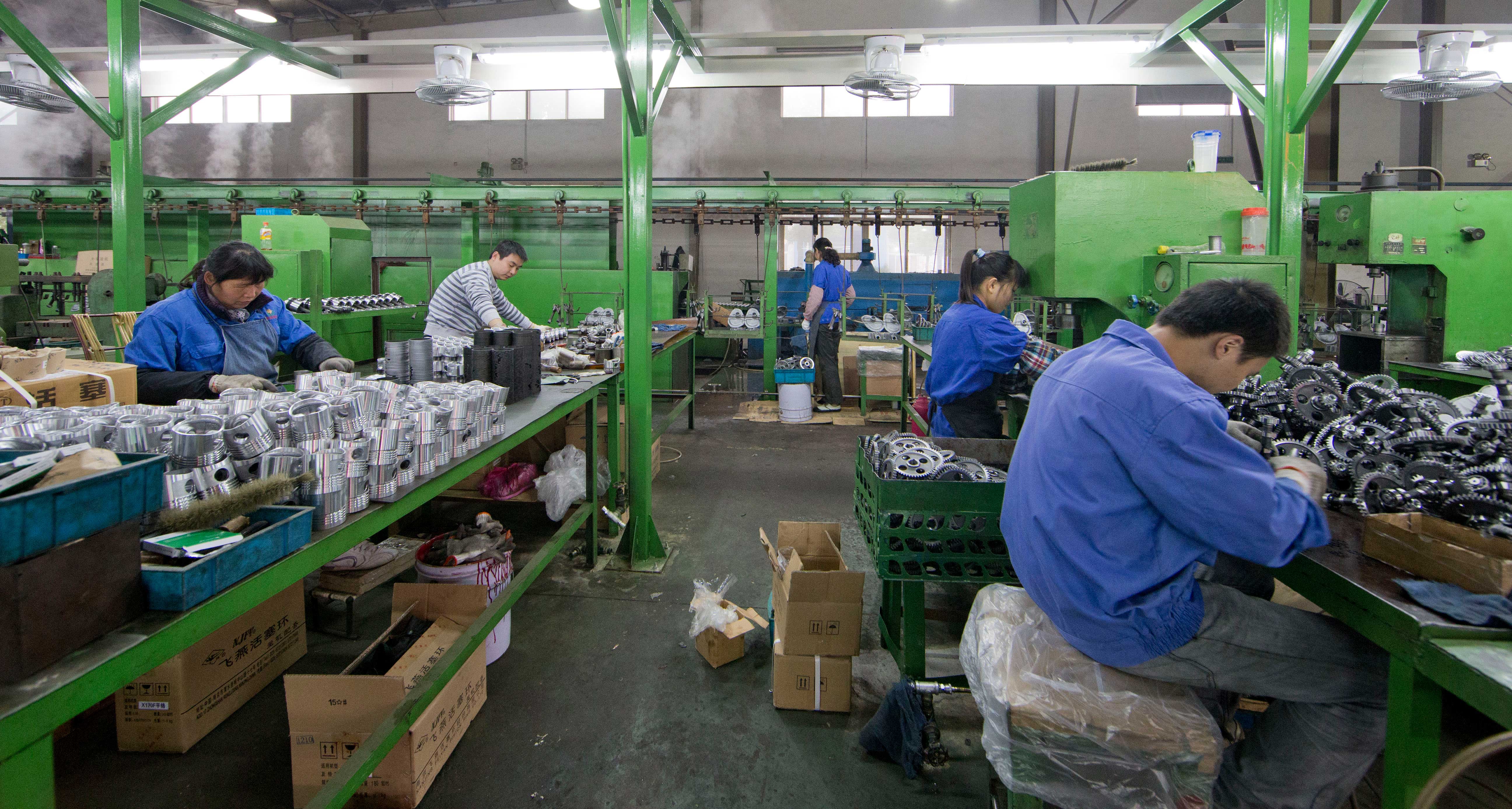
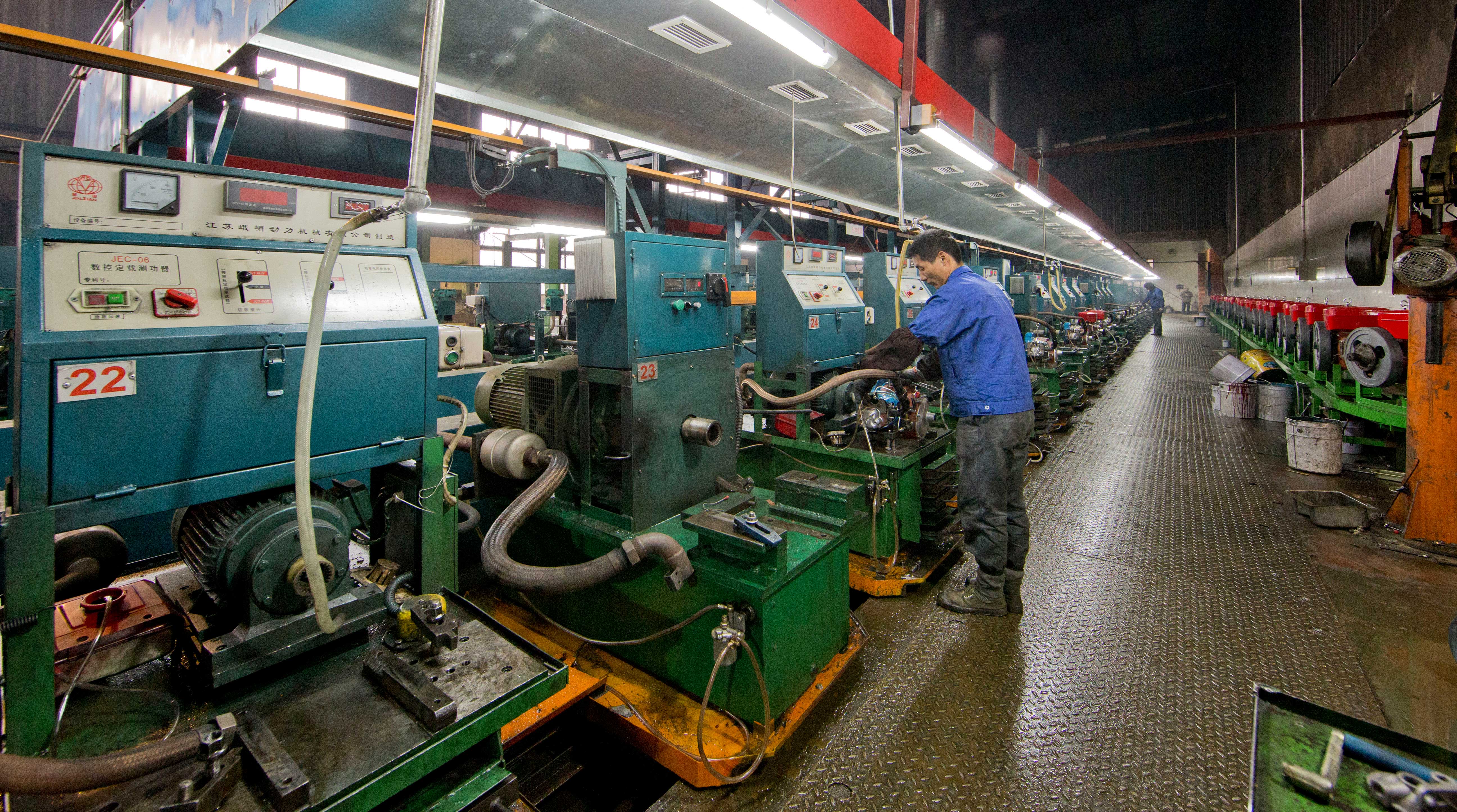
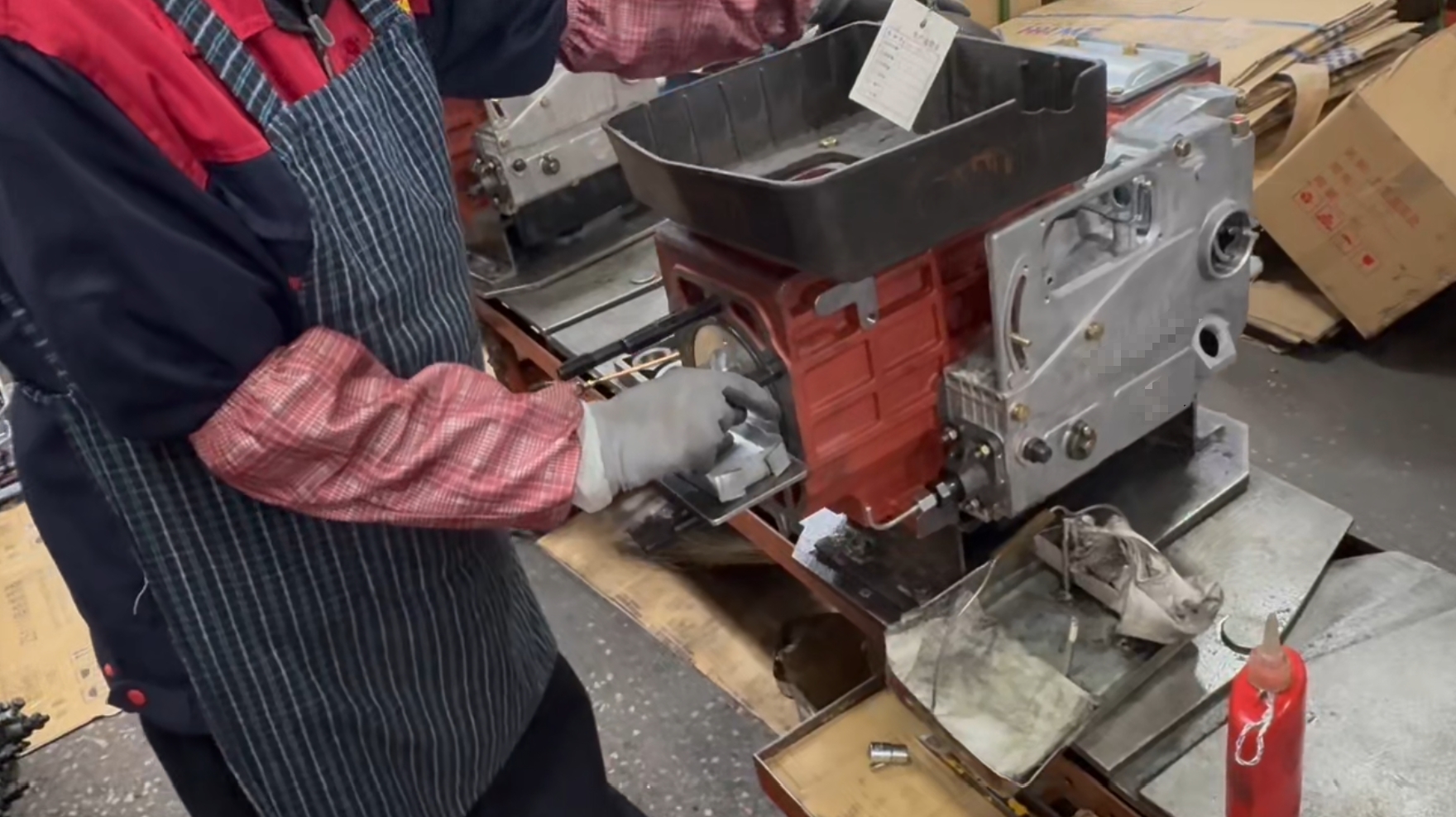
Factory images and process descriptions can support a supplier evaluation, but they do not replace model-specific acceptance records. The approved Willson production material shows a component assembly production line, a product testing line, and a cylinder-head-cover oil-leak inspection station. These are relevant indicators of the production and inspection environment. The buyer should still ask for the record that applies to the ordered model, batch, and shipment.
Commercial release conditions
Release should be tied to documents, not to the shipment date alone. The purchase order can state that goods are released only after the inspection record, packing list, model marking, manual, and required destination documents are complete. If the buyer uses a third-party inspection, the release authority and the treatment of minor defects should be agreed before inspection. This prevents a late dispute over whether a finding is acceptable.
Safety and maintenance terms
The approved risk-control material for this product family states that improper maintenance procedures may result in equipment damage or personal injury. The control method is to shut down the engine before maintenance and operate according to the instruction manual. The supplier measure is to provide detailed operation and maintenance manuals and offer pre-sale technical training and after-sales support. In purchase-term language, this means the manual and training scope should be specified before the order, not left as an informal after-sales promise.
Useful questions include: Which manual language is supplied? Is the manual delivered with the shipment or before it? Does the quotation include any pre-sale technical training? What is the contact route for after-sales support? These are not marketing questions. They affect safe use and the buyer's ability to support the engine in the destination market.
Paint, cleaning, and corrosion claims
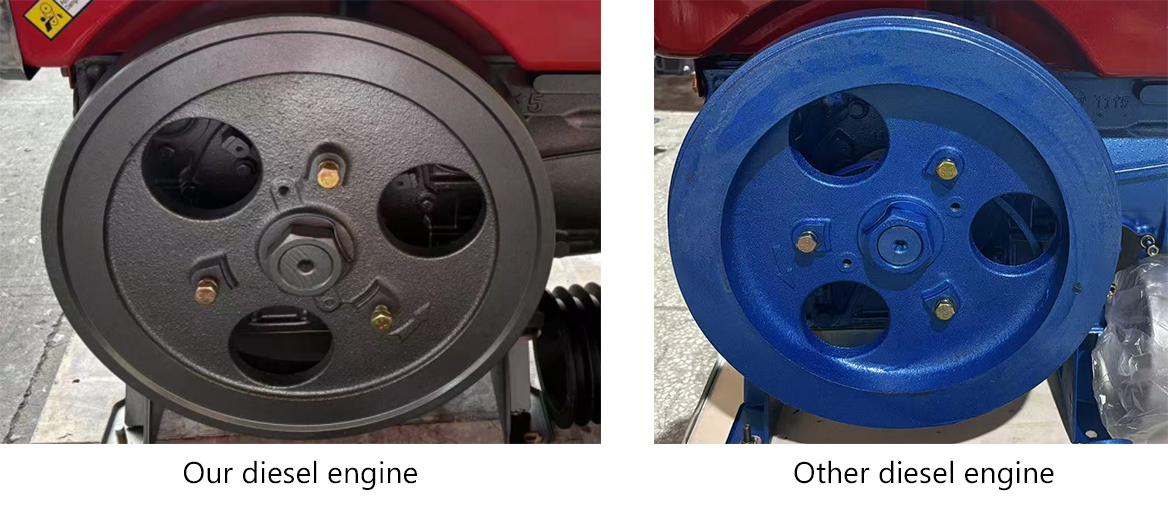
One documented production difference in the Willson comparison material is complete engine cleaning prior to painting. The comparison states that paint adhesion rate improved by 20%, anti-corrosion performance was enhanced by 30%, and long-term maintenance cost was reduced by 15% compared with other diesel engines in that comparison. It also identifies high-dust agricultural environments as the intended benefit area and notes less frequent repainting and rust repair, with consistent power output and low fuel consumption.
These figures should be read as supplier comparison claims for the stated comparison, not as a guarantee for every model, duty cycle, or destination. A buyer who intends to rely on the finish or corrosion benefit should ask for the test basis, the applicable model, and the cleaning or painting specification used for the ordered batch. The same discipline applies to any supplier comparison: accept the claim only when its model, conditions, and evidence are clear.
Price versus total purchasing cost
Total purchasing cost includes more than the engine price. For a decision-stage comparison, request an itemized landed-cost view using the buyer's actual destination and order structure. The exact amounts must come from the supplier and logistics providers; this guide does not invent price bands or freight rates.
- Unit price: the quoted engine price under a stated Incoterm and validity period.
- Packing and loading: export packing, marking, loading supervision, and any special protection.
- Freight and insurance: the movement cost to the destination, including any transshipment or inland leg.
- Duty and taxes: classification under the applicable national tariff, plus import taxes and fees.
- Compliance and inspection: testing, certification documents, third-party inspection, and administrative work.
- Spares and training: initial spare parts, manuals, training, and the cost of support access.
- Warranty administration: the cost of handling a claim, return logistics, and downtime.
This is where the purchase-term comparison becomes useful. A supplier with a slightly higher unit price may include a clearer acceptance file, a better spare-parts list, or a more workable warranty route. A supplier with the lowest unit price may leave those items outside the quotation. The buyer should compare the total obligation, not only the first invoice.
What the Willson company facts mean for a term comparison
The approved company facts provide a useful supplier-evaluation baseline without proving that every model or market requirement is met. CHANGZHOU VISION INTERNATIONAL TRADING CO.,LTD was founded in 2010, has 95 employees, an annual output of 100,000 units, a research and development team of 5 engineers, and an export ratio of 70%. Its main markets are South America, Africa, Southeast Asia, and the Middle East. The company states that it holds ISO9001 quality management system certification and ISO14000 environmental management system certification.
These facts help the buyer ask better questions:
- Volume and capacity: annual output of 100,000 units is a supplier capability fact. It does not by itself confirm the delivery date for a specific order, model mix, or accessory scope.
- Engineering support: a 5-engineer research and development team is a concrete fact to discuss when the order involves customization or a technical question. The buyer should still confirm the named technical contact and the response route.
- Export experience: a 70% export ratio and the listed markets indicate that export documents and destination requirements are part of normal commercial discussion. They do not replace the documents required for the buyer's specific destination.
- Certifications: ISO9001 and ISO14000 are management-system certifications. They support a quality and environmental management evaluation, but they are not a model-specific emission approval for every destination market.
- Product range: the approved 3–45 horsepower, air-cooled and water-cooled range and the listed applications help narrow the configuration discussion. The exact model still has to be confirmed in the quotation.

The correct use of these facts is to structure the supplier audit. The buyer can ask how the quoted model is scheduled, which engineer supports the technical file, which export documents are prepared in-house, and which destination approvals are available for the exact model. These questions turn company background into purchasing terms.
Application-specific term adjustments
The same engine family can be purchased for different duties, so the term sheet should reflect the actual application. The approved product list includes small tractors, agricultural machinery, generator sets, water pumps, small construction machinery, air compressors, inland waterway vessels, and agricultural and sideline product processing. With that breadth, a generic quotation can easily omit the detail that matters to the installation.
- Irrigation pump or water pump: state the pump duty, coupling responsibility, and running conditions that affect engine selection. Confirm who supplies and matches the coupling or mounting parts if they are not part of the engine scope.
- Power tiller or farm machinery: clarify mounting interfaces, control connections, and the accessories included with the engine. Keep the model and configuration identity stable across the comparison.
- Generator set: define the engine-generator matching responsibility and the documents needed for the generator package. Do not assume that an engine quotation automatically covers the complete generator set scope.
- Thresher or rice mill: describe the dust and load environment in the buying brief and link it to the finish, filtration, and maintenance requirements the supplier is asked to confirm.
- High-dust agricultural use: if the buyer intends to rely on the finish and corrosion comparison, ask for the model-specific cleaning and painting specification and the inspection record.
Application detail is not decoration. It determines which accessories, documents, and acceptance checks belong in the purchase order.
When SKD or CKD is part of the comparison
Some buyers compare complete engines with SKD or CKD supply. Commercial guidance from Terex Diesel describes lower freight, customs savings, and local assembly support as potential advantages of SKD or CKD shipping for engine distribution. Those are commercial claims about the supply model, not a guarantee that every SKD or CKD offer is cheaper or easier to execute.
If SKD or CKD is in the comparison, the purchase term should define the knock-down level, the parts list, packaging, marking, assembly instructions, technical support, and the party responsible for missing or damaged parts. The buyer should also compare the local assembly cost and the import treatment of the knock-down kit against the complete-engine option. A supplier that uses the SKD or CKD label without a complete parts list and support scope has not provided a comparable term.
FAQ: comparing single cylinder diesel engine purchase terms
Which compliance documents should be checked before comparing single cylinder diesel engine purchase terms?
Start with the destination market and the importer's legal requirement. The EU Stage V framework under Regulation (EU) 2016/1628, U.S. 40 CFR Part 1039, and China GB 20891-2014 are separate non-road engine regimes. Ask the supplier to state the emission stage or document it can support for the exact model and destination, and identify who provides the declaration. A management-system certificate such as ISO9001 or ISO14000 is useful for supplier evaluation but does not replace model-specific market approval.
How do I compare suppliers when power, cooling, or configuration differ?
Do not compare a water-cooled quotation with an air-cooled quotation, or a basic engine with an accessory package, as if they were the same offer. Ask each supplier to quote the same configuration, or record the deviation and adjust the comparison. The approved Willson range covers 3–45 horsepower, air-cooled and water-cooled single-cylinder engines, so the exact model must be fixed before price is compared. If electric start is offered, state whether the starter, battery, and charging circuit are included.
How should acceptance criteria be written into the purchase order?
Write acceptance criteria as release conditions with an owner, record, and disposition rule. Useful items include exact model identity, assembly and leak checks, finish condition, performance declaration for the ordered model, manual language, packing, model marking, and pre-shipment inspection. Attach the check sheet or test record to the shipment file. A general quality promise is not enough because it cannot be verified at release.
What should a buyer compare besides unit price?
Compare the price basis, scope of supply, packing, payment schedule, inspection rights, documentation, warranty route, spare-parts list, training, and delivery commitments. Also compare the compliance file and the acceptance evidence for the exact model. These terms affect landed cost and the buyer's ability to clear, install, and support the engine. The lowest unit price can carry the highest unresolved obligation if these items are excluded.
What sample or pre-production approval step makes sense?
If a sample is offered, define what it approves: model identity, configuration, finish, accessories, packaging, and the acceptance record. State whether the approved sample becomes a golden sample for later shipments and how deviations are handled. The sample should not replace the written specification, and it should not be used to introduce a model or feature that is outside the supplier's approved product facts.
What lead-time terms should be clarified before ordering?
Make lead time a written term with a start date, production milestones, pre-shipment inspection, document release, and delay handling. Clarify whether the date is ex-works, shipment-ready, or arrival at destination, because those are different obligations. The exact duration must come from the supplier's quotation for the ordered model and quantity. A verbal estimate is not a supply term.
Before releasing the order, request a model-specific quotation and acceptance checklist that uses the same term sheet for every supplier. A short technical discussion at this stage is more useful than a later dispute over what the price included. Willson buyers can request the current product brochure and model-specific commercial terms through the company contact route.
Conclusion: compare the obligation, not only the engine price
Single cylinder diesel engine purchase terms should be compared as a package of product identity, compliance scope, acceptance evidence, commercial obligations, and after-sales support. The lowest unit price is only one data point. It becomes meaningful when every supplier quotes the same model, configuration, delivery basis, documentation, inspection route, and warranty structure.
Use the matrices and checklist in this guide to build a comparison file before ordering. Confirm the exact model and application, write the acceptance criteria as release conditions, match the compliance documents to the destination, and price the total purchasing obligation. That approach keeps the decision grounded in verified product facts and clear commercial terms instead of an unverified price comparison.
Next step: use the model-specific quotation to confirm scope, compliance documents, acceptance records, packing, warranty, and lead time before the order is released.
Download the Willson single cylinder diesel engine product brochure (PDF).

Have Questions or Need More Details?
Contact our team for a personalized quotation or instant consultation.
Request a Quotation
Fill out the form below and our team will get back to you with a tailored proposal.
WhatsApp Direct Chat
Prefer to chat in real-time? Message us on WhatsApp for instant assistance & quick answers.
- Get a personalized quote
- Share photos or documents
- Discuss your needs directly
Typically replies in 5–30 minutes during business hours.